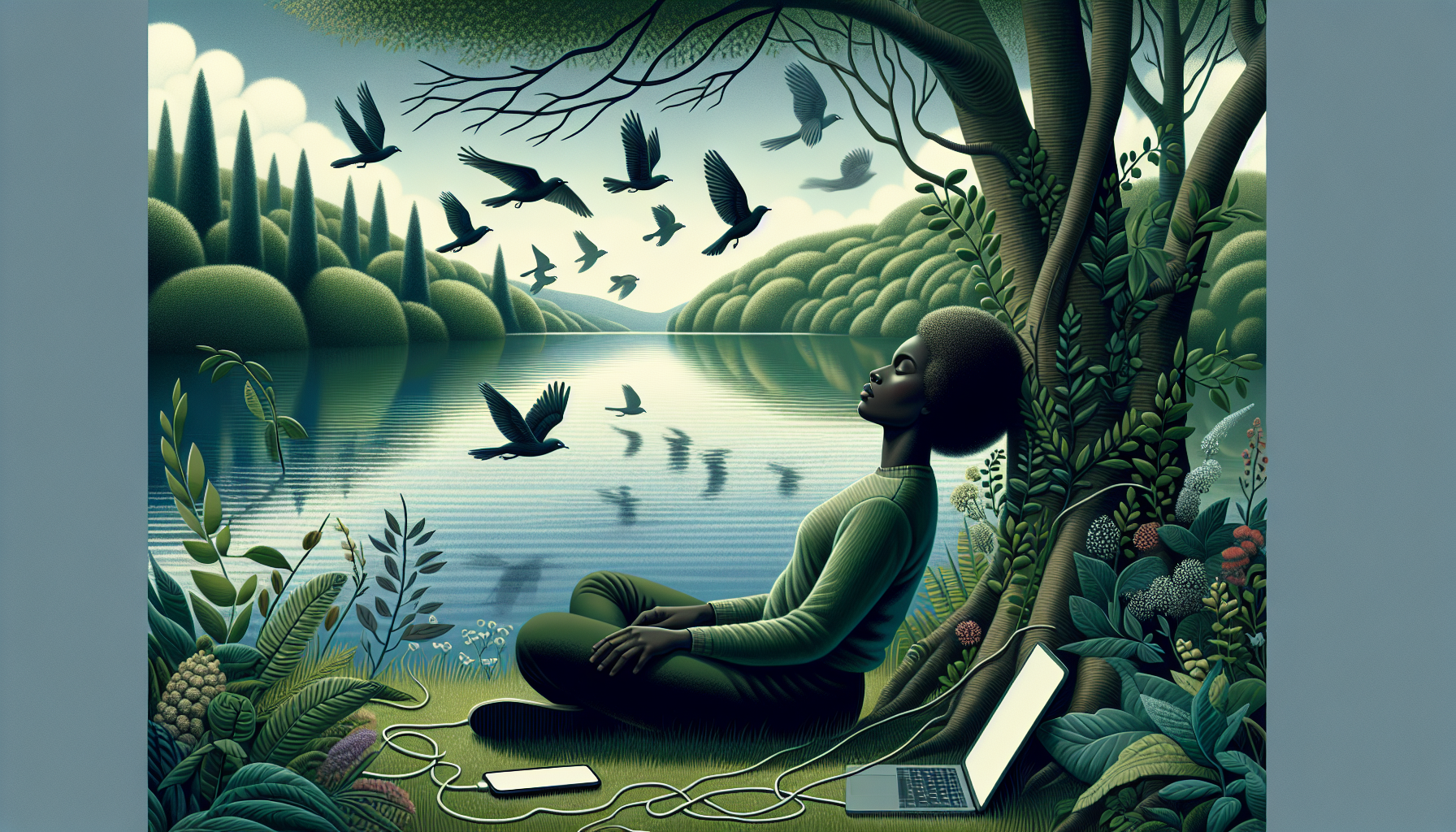
In a world where our gadgets feel like they’re part of us, the thought of switching off might sound about as fun as visiting the dentist. But what if I told you that setting aside your phone could be the secret to a livelier, more productive, and more satisfying life? This story will guide you through the surprising world of digital detox, where less screen time means more real living.
As we look at the good things that come from unplugging, you’ll see how taking a break from the constant digital buzz can actually make you feel more connected to the world around you. We’ll dig into why our brains need a rest from the endless dings of notifications, and how enjoying moments without screens can actually lead to greater success when we are online. But don’t worry, this isn’t just another lecture against technology. Instead, get ready to be amazed by the unexpected ways a digital detox can improve how you relate to technology.
By the time you finish reading this, you’ll have some easy-to-use ideas to take back your time and attention from the digital world. You’ll learn how to swap the Fear of Missing Out (FOMO) for the Joy of Missing Out (JOMO), and why sometimes the best way to get ahead is to step back. So, are you up for a thought-provoking adventure that challenges what you think you know about our relationship with technology? Let’s jump in and discover: how putting down our devices can help us truly connect.
The Digital Puzzle: When Having More Means Getting Less
Imagine this: You’re at a concert, watching your favorite band play live. The music is amazing, the crowd is buzzing, and you’re… watching it all through your phone as you record the whole thing. Sound familiar? That’s the digital puzzle, where trying to capture and share every moment often means missing the very things we’re trying to save.
It’s a strange thing about today’s world - the more connected we are online, the more disconnected we often feel from the real world. As Cal Newport cleverly points out in his book “Digital Minimalism: Choosing a Focused Life in a Noisy World,” “The tycoons of social media have to stop pretending that they’re friendly nerd gods building a better world and admit they’re just tobacco farmers in T-shirts selling an addictive product to children.”
This need to always be online is causing problems. A recent study by the Pew Research Center showed that over 70% of people felt better mentally and were more productive after doing a digital detox. It seems that in trying to stay plugged in, we’ve accidentally unplugged from some of the most important parts of our lives.
The Cool Surprises of Saying “No” to Alerts
Now, you might be thinking, “But I have to be available all the time for work!” or “How will I know what’s going on in the world?” Don’t worry! The great thing about digital detox is that it’s flexible. It’s not about throwing your phone into the nearest lake (though that might sound good sometimes). Instead, it’s about making time in your life that’s free from digital distractions.
Think about this: A study in 2023 from the Journal of Digital Wellness found that people who spent a week away from digital devices had a 65% increase in talking to people face-to-face. That’s right - by turning off their devices, they actually became more connected to the people around them. It’s like when we turn off our screens, we turn on our ability to really see and connect with the world.
But that’s not all. Digital detox has been shown to:
- Lower stress and worry
- Help you sleep better
- Improve your focus and productivity
- Create stronger personal connections
- Bring back old interests and hobbies
It’s like giving your brain a vacation. By stepping away from the constant stream of information, you’re letting your mind rest, reset, and find its natural rhythm.
From FOMO to JOMO: Changing How We See Technology
Let’s be honest: the thought of missing the latest meme or Twitter fight can make us nervous. But what if we could change that? What if, instead of worrying about what we might miss online, we started to enjoy missing out on the digital noise and focusing on the here and now?
This change from FOMO to JOMO is what makes digital detox work. It’s about realizing that every moment spent scrolling through social media is a moment not spent doing something in the real world. As Dan Harris jokes in his book “10% Happier: How I Tamed the Voice in My Head,” “Make the present moment your friend rather than your enemy. Because many people live habitually as if the present moment were an obstacle that they need to overcome in order to get to the next moment.”
By embracing JOMO, we open ourselves up to a world of possibilities:
- Rediscover:ing hobbies or trying new ones
- Making deeper connections with friends and family
- Practicing mindfulness like meditation or yoga
- Simply enjoying a moment without feeling the need to take a picture
The funny thing is that by disconnecting, we often end up feeling more connected - to ourselves, to others, and to the world.
Easy Ways to Try Out a Digital Detox
Now, I know what you’re thinking: “This sounds great, but how do I actually do it?” Don’t worry, brave explorer of the offline world! Here are some easy ideas to help you start your digital detox:
-
Set specific “tech-free” times: Pick certain times of the day to be screen-free. Maybe it’s the first hour after you wake up, or the last hour before bed.
-
Create tech-free zones: Make a rule of “no phones at the dinner table” to have better conversations and improve family time.
-
Use technology to help you fight technology: Funny, right? But there are lots of apps that can help you keep track of and limit your screen time. Use them!
-
Practice mindfulness: Add meditation, yoga, or journaling to your daily routine. These things can help you stay focused, even when you’re not actively “detoxing.”
-
Bring back old-school fun: Remember books? Those things made of paper that don’t need to be charged? Pick one up! Or try a hobby that doesn’t involve screens, like gardening, painting, or cooking.
-
Plan offline adventures: Challenge yourself to go for a hike, visit a museum, or explore a new part of your city - all without using your phone to find your way or take pictures.
Remember, the goal isn’t to get rid of technology completely. It’s about finding a balance that lets you enjoy the good parts of the digital world without letting it take over your life.
The Productivity Secret: Why Doing Less Can Help You Do More
Here’s something to think about: What if I told you that working less could actually make you more productive? It sounds strange, but it’s a key part of doing a digital detox.
When we’re always online, we often get stuck doing “busy work” - answering emails, checking alerts, and multitasking all day long. But this constant partial attention actually makes it harder to focus and do real work.
By choosing to disconnect, we make room for what Newport calls “deep work” - the kind of focused, uninterrupted effort that leads to real productivity and new ideas. It’s in these quiet moments that our minds can wander, make connections, and solve problems.
Try these ideas to be more productive by disconnecting:
- Use the Pomodoro Technique: Work in focused 25-minute sessions, followed by short breaks away from screens.
- Schedule “offline hours” for deep work.
- Use airplane mode more often - not just on planes!
- Answer emails and messages in batches instead of right away.
The Science of Doing Nothing: Why Your Brain Needs to Be Bored
In our effort to always be entertained and informed, we’ve almost gotten rid of boredom. But here’s the twist: boredom is actually important for our brains and creativity.
When we’re bored, our brains go into a state called the “default mode network.” This is when our minds are free to wander, make new connections, and think creatively. By constantly filling our brains with digital stuff, we’re actually limiting our ability to be creative.
So, the next time you reach for your phone without thinking, try this instead:
- Look out a window and let your mind wander
- Go for a walk without listening to anything
- Sit in silence for a few minutes and just notice your thoughts
You might be surprised by the ideas that pop up when you give your brain some screen-free time.
The Social Trick: Disconnecting to Reconnect
In a time when we have more ways to talk to each other than ever before, many of us are feeling more alone. It’s the big irony of our digital age - we’re more connected, but also more lonely.
Digital detox offers a way back to real connection. By putting down our devices, we make room for face-to-face talks, deep conversations, and shared experiences that don’t need to be filtered, tagged, or shared online.
Try these ideas to build real-world connections:
- Plan a tech-free game night with friends
- Have a “phones in the basket” rule at parties
- Really listen in conversations, without the distraction of your devices
Remember, the goal isn’t to stop using digital communication, but to find a balance that makes real-world connections better instead of replacing them.
Conclusion: The Skill of Using Technology Wisely
As we finish our trip through the world of digital detox, it’s important to remember that the goal isn’t to hate technology. After all, I’m writing this on a computer, and you’re reading it on a screen. The internet and our devices have brought amazing things and connections to our lives.
The key is to develop a smart relationship with technology - one where we use our devices to make our lives better, instead of letting them control us. As Newport wisely says, “Digital minimalism is a philosophy of technology use in which you focus your online time on a small number of carefully selected and optimized activities that strongly support things you value, and then happily miss out on everything else.”
By embracing the surprising power of digital detox, we can refresh our minds, improve our relationships, and find the joy of living in the moment. So, are you ready to unplug and enjoy a more balanced, fulfilling life? The real world is waiting for you - and trust me, it’s even more exciting than your Instagram feed.
References
Cal Newport, “Digital Minimalism: Choosing a Focused Life in a Noisy World” Pew Research Center Survey on Digital Detox Benefits Journal of Digital Wellness 2023 Study Dan Harris, “10% Happier: How I Tamed the Voice in My Head”
If you’ve enjoyed this article it would be a huge help if you would share it with a friend or two. Alternatively you can support works like this by buying me a Coffee