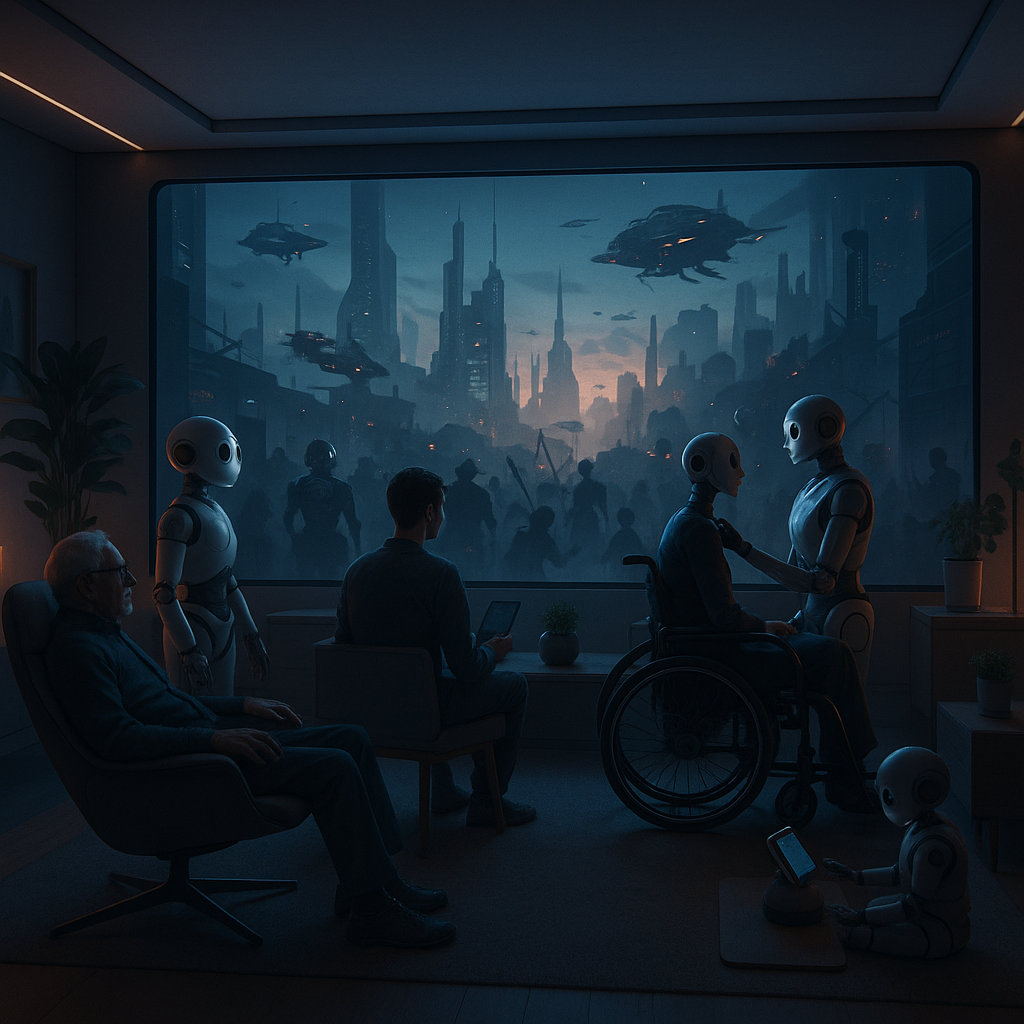
The Silent Revolution in Your Living Room
~ Uncluttering Life: The Hidden Power of Minimalist Interiors
In the noisy world of interior design, where maximalism screams for attention with its riot of colors and explosion of objects, something quieter yet equally powerful is taking root. What if the secret to a more productive, peaceful, and purposeful home isn’t about what you add, but what you take away? This counterintuitive approach—minimalism—isn’t merely about sterile white rooms and empty spaces. It’s a rebellion against the consumption-driven chaos that has infiltrated our living spaces and, by extension, our minds. The question isn’t whether less is more, but whether less might actually be everything.
The Paradox of Emptiness
The human brain performs an astonishing feat every waking moment—it filters the bombardment of sensory information to prevent overwhelm. Yet we’ve created homes that work against this natural process, stuffing them with visual noise that our neural circuits must constantly process and suppress. A minimalist space isn’t actually empty—it’s full of potential.
“When we remove visual clutter from our environment, we free up cognitive resources for the tasks and relationships that matter most,” explains Dr. Sabine Kastner, Professor of Psychology at Princeton University, whose research reveals that our visual cortex has limited processing capacity [1].
This explains why entering a carefully designed minimalist room feels like taking a deep breath. The brain, perpetually overworked by modern life, suddenly finds itself with processing power to spare. This neurological relief translates into tangible benefits—improved focus, reduced anxiety, and enhanced creativity.
The Japanese concept of ma—the meaningful pause or negative space—captures this paradox perfectly. In the same way that music isn’t just notes but the silences between them, a room isn’t just objects but the relationships and breathing room between those objects. The minimalist designer, like a jazz musician, knows that what they choose not to include is as important as what they do.
The Palette of Restraint
The color schemes that dominate minimalist interiors might seem simplistic at first glance—whites, beiges, soft greys—but they represent a sophisticated understanding of human psychology. These neutral palettes aren’t boring; they’re intentionally liberating.
Think of color like seasoning in cooking. A skilled chef knows that overseasoning masks the natural flavors of quality ingredients. Similarly, neutral tones create a canvas where texture, light, and form can take center stage without competition from bold colors demanding attention.
The earthy tones common in Japandi style—that fascinating marriage of Japanese minimalism and Scandinavian functionality—work like a reset button for overstimulated minds. Clay reds, warm beiges, and soft whites don’t just soothe; they reconnect us with natural environments our ancestors evolved in for millions of years [5].
But neutrality doesn’t mean monotony. The modern minimalist knows that restraint creates opportunity for meaningful contrast. A single carefully chosen item in a bold hue—perhaps a handcrafted ceramic in cobalt blue—gains almost talismanic power against a neutral backdrop. The eye rests, then celebrates the intentional exception.
Material Honesty
While fast-fashion furnishings offer disposable novelty, minimalism takes the long view with materials that tell the truth about themselves. Raw wood doesn’t pretend to be anything other than what it is—a slice of once-living tree with all its character and imperfections intact. Linen proudly displays its irregular weave. Stone remains cool to the touch, unapologetically heavy and permanent.
This material honesty creates a subtle but profound shift in our relationship with our possessions. When surrounded by authentic materials that age gracefully, we begin to value patina over perfection, durability over disposability [1]. The scratches on a solid wood table become a record of family meals rather than damage requiring replacement.
There’s an environmental wisdom embedded in this approach. Natural materials like bamboo, hemp, and cork are renewable resources that sequester carbon rather than releasing it. They biodegrade at the end of their useful lives instead of lingering in landfills for centuries [5]. The minimalist aesthetic thus aligns environmental ethics with visual beauty—a harmony that feels increasingly urgent in our climate-conscious age.
The Curation Imperative
Perhaps the most challenging aspect of minimalist design—and its greatest gift—is the imperative to curate ruthlessly. Every item must earn its place through a combination of utility and beauty. This standard forces a revolutionary question: What truly deserves space in our homes and lives?
The answer often surprises us. Many of the possessions that survive this scrutiny aren’t the expensive status symbols we might expect, but items with authentic personal meaning—the handmade quilt from a grandmother, the ceramic mug that fits perfectly in the hand, the book that changed a perspective.
“The question of what you want to own is actually the question of how you want to live your life,” observes Marie Kondo, whose minimalist philosophy has sparked global reconsideration of our relationship with possessions [6].
This curation extends beyond objects to the activities and commitments we allow into our lives. The minimalist home, with its deliberate emptiness, creates space for what anthropologists call “deep play”—those fully absorbing activities that put us in a flow state and form the core of meaningful human experience.
A family gathered around a simple wooden table for a board game, uninterrupted by visual distractions. A comfortable reading nook with nothing but a chair, good light, and books. A kitchen with clear counters that invites unhurried cooking from scratch. These scenarios represent minimalism’s ultimate aim—not aesthetic perfection, but a life less cluttered with the insignificant and more filled with the essential.
Functional Beauty
The marriage of form and function reaches its zenith in minimalist spaces. Unlike purely decorative approaches, minimalism refuses to separate beauty from utility—a perspective captured perfectly in the Danish concept of “hygge” and the Swedish “lagom” (just enough).
Storage solutions in minimalist homes don’t hide clutter; they eliminate the need for it through thoughtful systems that make daily life smoother. A bench with built-in compartments serves triple duty—seating, storage, and sculptural element. A wall-mounted desk folds away when not needed, transforming a workspace back into living space [8].
This functional beauty extends to the invisible infrastructure of the home. Lighting systems that mimic natural rhythms, ventilation that maintains air quality without intrusive equipment, acoustic treatments that absorb sound without calling attention to themselves—these elements contribute to wellbeing without demanding visual attention.
The ultimate expression of functional beauty might be found in the smallest details: the satisfying weight of a solid door handle, the perfect tension in a kitchen faucet lever, the subtle texture of wall finishes that change character as light shifts throughout the day. These tactile interactions form the unspoken language of a space, communicating quality and care through touch as much as sight.
The Minimalist Paradox
Here lies the ultimate paradox of minimalist design: its simplicity is extraordinarily difficult to achieve. Creating spaces that feel both serene and warm, uncluttered and characterful, requires sophisticated understanding of proportion, material, light, and human behavior.
The true minimalist space isn’t achieved through elimination alone, but through careful calibration of the elements that remain. Too sparse, and a room feels unwelcoming; too controlled, and it loses humanity; too perfect, and it becomes unapproachable.
This balancing act explains why truly successful minimalist interiors often feel both timeless and deeply personal—they’ve been reduced to only what matters most to their inhabitants, with nothing extraneous to dilute that essence.
As our digital lives grow increasingly cluttered with notifications, advertisements, and endless content, the physical sanctuary of a minimalist home offers a necessary counterbalance—a place where attention can be reclaimed and redirected toward experiences rather than consumption.
Beyond Aesthetics
The most compelling argument for minimalist interiors may be their impact beyond aesthetics. Research increasingly supports connections between uncluttered environments and psychological wellbeing. A study from Princeton University’s Neuroscience Institute found that visual clutter competes for attention, resulting in decreased task performance and increased stress [7].
But minimalism’s benefits extend further. With fewer possessions requiring maintenance, cleaning, organizing, and eventually disposal, minimalist households report more free time for relationships and experiences. The financial implications are equally significant—reduced consumption means reduced spending, creating opportunities for financial freedom that many find more valuable than material abundance.
There’s even evidence suggesting environmental benefits beyond the obvious reduction in consumption. Minimalist homes typically require less energy to heat, cool, and light. They need fewer cleaning products, produce less waste, and encourage more mindful purchasing decisions that favor quality over quantity [8].
From Trend to Transformation
Unlike fleeting design trends that require wholesale replacements to stay current, minimalism offers a sustainable approach to creating spaces that evolve gracefully. The well-designed minimalist interior accommodates changing needs through flexibility rather than acquisition, adapting to life’s seasons without requiring constant updates.
The young professional’s studio apartment with multipurpose furniture becomes the family home with defined zones for different activities, which later transforms into the empty nester’s comfortable retreat—all possible within the same thoughtful framework that prioritizes quality over quantity, adaptability over specialization.
This longevity makes minimalism not just a design choice but a quiet revolution against the planned obsolescence and trend-driven consumption that have dominated interior design for decades. When homes are built around timeless principles rather than temporary fashions, they remain relevant and beautiful far longer.
The Path Forward
For those intrigued by minimalism’s possibilities, the journey begins not with emptying rooms but with asking better questions: What activities truly deserve space in my home? Which possessions genuinely enhance daily life? What visual and tactile elements bring authentic joy rather than momentary satisfaction?
The answers will be deeply personal, leading to spaces that reflect individual priorities rather than conforming to a single minimalist template. Some may prioritize books and reading nooks, others cooking equipment and dining space, still others art studios or music rooms—all can embody minimalist principles while accommodating these diverse focuses.
The elegant simplicity of minimalist interiors isn’t about sacrifice but clarification—removing the extraneous to reveal what matters most. In a world increasingly characterized by complexity and distraction, this clarity may be the most valuable luxury of all.
References
-
Princeton University Neuroscience Institute. “Interactions of Top-Down and Bottom-Up Mechanisms in Human Visual Cortex.” Journal of Neuroscience, 2011.
-
Axelsson, Ö., Nilsson, M.E., Berglund, B. “The Swedish Soundscape-Quality Protocol.” Journal of the Acoustical Society of America, 2010.
-
Kondo, Marie. “The Life-Changing Magic of Tidying Up: The Japanese Art of Decluttering and Organizing.” Ten Speed Press, 2014.
-
McMains, S., Kastner, S. “Interactions of Top-Down and Bottom-Up Mechanisms in Human Visual Cortex.” Journal of Neuroscience, 2011.
-
Environmental Protection Agency. “Sustainable Materials Management: The Road Ahead.” EPA, 2009.
If you’ve enjoyed this article it would be a huge help if you would share it with a friend or two. Alternatively you can support works like this by buying me a Coffee