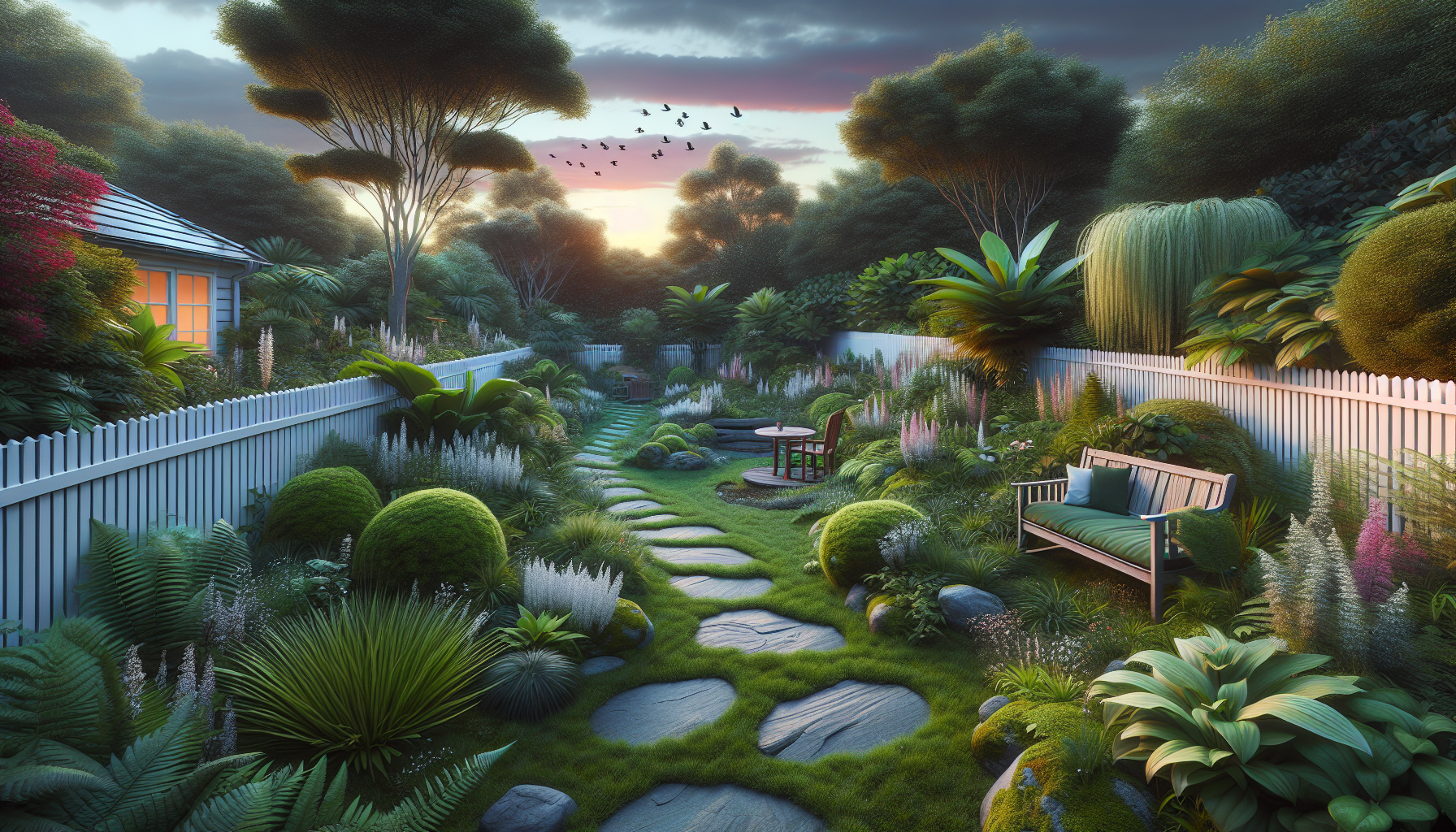
The Quiet Revolution in Your Backyard: Why Less Gardening Yields More Joy ~
In a world obsessed with maximization, your garden might be the one place where doing less delivers more. What if the secret to a stunning outdoor space isn’t found in expensive landscaping catalogs or backbreaking weekend labor, but rather in strategic simplicity? This counterintuitive approach—where minimalism meets mother nature—may transform not just your garden, but your relationship with it entirely.
Breaking Ground with Minimalism
The conventional wisdom of gardening has long been rooted in the notion that beautiful gardens require constant attention, diverse plant collections, and elaborate designs. Most weekend warriors return from garden centers with cars loaded with plants that catch their eye, creating what I like to call “horticultural chaos theory”—where random beauty attempts to emerge from randomness, but usually just creates visual noise instead.
Minimalist gardening turns this assumption on its head. Rather than treating your outdoor space as a botanical collection demanding attention like needy houseguests, simplicity invites you to curate with intention.
“A minimalist garden is not about emptiness, but about creating meaning with less,” explains landscape designer Sarah Wilson. “It’s finding power in restraint rather than abundance.”
This philosophy parallels what happens in other creative disciplines. Musicians know that the spaces between notes define the rhythm. Painters understand that negative space enhances the subject. Similarly, the deliberate “emptiness” in a minimalist garden creates a visual rhythm that’s both pleasing and peaceful.
The Art of Plant Selection: Less Variety, More Impact
When building a minimalist garden, choosing plants resembles assembling a small but perfect dinner party—you want fewer guests but greater connection. The objective isn’t collecting botanical oddities but creating cohesive visual impact with carefully selected specimens.
Finding Your Garden’s Signature Plants
In desert landscapes, native species like red yucca or purple verbena provide vibrant focal points while thriving with minimal intervention. In temperate climates, grasses such as carex and miscanthus offer movement and texture throughout seasons.
The magic happens when you repeat these choices throughout your landscape. Unlike the traditional approach where gardens become a chaotic museum of plant impulse purchases, repetition of form creates rhythm and cohesion. Three identical ornamental grasses will create more visual impact than three different varieties competing for attention.
This approach isn’t just aesthetically pleasing—it’s also remarkably practical. When your garden features fewer species, you develop deeper knowledge about their specific needs. Like learning to cook a handful of dishes perfectly rather than hundreds adequately, you’ll become an expert in your garden’s limited palette.
Hardscaping: The Skeleton of Simplicity
If plants provide the garden’s personality, hardscaping supplies its bone structure. In minimalist gardens, these elements become even more crucial, defining spaces with clarity and purpose.
Gravel pathways winding between raised beds don’t just look elegant—they reduce maintenance by suppressing weeds and improving drainage. Concrete or stone walls create clean lines that contrast beautifully with the organic forms of plants.
What’s fascinating is how these seemingly “hard” elements can make a garden feel more natural, not less. Like riverbanks define a stream or cliff faces frame a valley, deliberate hardscaping creates context that enhances rather than competes with botanical elements.
The relationship between hard and soft elements creates a dialogue similar to that between lyrics and melody in a well-crafted song. Neither dominates; they complement each other to create something greater than either could alone.
The Hidden Benefits of Less Maintenance
Perhaps the most revolutionary aspect of minimalist gardening is reframing maintenance not as a burden but as intentional curation. Gardens that demand constant attention often become sources of guilt rather than joy. How many weekends have been sacrificed to weeding beds that were overplanted in the first place?
By reducing plant diversity and implementing smart techniques like mulching and no-dig approaches, minimalist gardens dramatically reduce maintenance requirements. The time saved translates directly into increased enjoyment of the space itself.
Consider the parallels with our digital lives. Just as periodic digital detoxes help us appreciate technology’s benefits without becoming enslaved to its demands, minimalist gardens let us enjoy nature’s beauty without becoming servants to its upkeep.
Practical Techniques for Maximum Results with Minimal Effort
Several practical approaches support the minimalist garden philosophy:
-
No-dig gardening: Rather than tilling soil annually (which disturbs beneficial microorganisms and brings weed seeds to the surface), simply add compost on top and let nature incorporate it downward.
-
Strategic mulching: A generous layer of organic mulch suppresses weeds, retains moisture, and gradually feeds the soil as it breaks down—a triple benefit from one action.
-
Self-seeding varieties: Plants that gently reproduce themselves, like certain salad greens or flowering perennials, create evolving landscapes that require little intervention.
-
Perennial vegetables: Unlike annual vegetables that require replanting each season, perennials like asparagus, rhubarb, and certain herbs return year after year with minimal care.
These techniques aren’t just labor-saving shortcuts; they’re based on deeper ecological wisdom. By working with natural systems rather than constantly fighting against them, we achieve more sustainable results with less effort—a principle that extends far beyond gardening.
The Psychological Benefits of Garden Simplicity
Minimalist gardens offer profound psychological benefits that extend beyond their aesthetic appeal. These spaces can become external manifestations of mental clarity—physical sanctuaries from the information overload and constant stimulation of modern life.
Research increasingly shows that exposure to natural environments reduces stress and improves cognitive function. Minimalist gardens maximize this benefit by eliminating visual clutter that might otherwise compete for attention. The result is a space that invites presence rather than distraction.
This mental clearing effect works similarly to how meditation functions. Just as focusing on breath creates mental space, focusing on fewer garden elements creates visual space that allows for deeper appreciation and awareness.
A garden with three perfectly placed trees and a simple ground cover creates room for contemplation. The eye rests rather than darts, and the mind follows suit. In a world where attention has become our scarcest resource, such spaces become increasingly valuable.
From Theory to Practice: Creating Your Minimalist Garden
Transforming existing gardens into more minimalist spaces doesn’t require starting from scratch. The process resembles editing a written work—removing what doesn’t serve the core message to strengthen what remains.
Begin by identifying what truly brings joy in your current landscape. Which plants thrive without constant intervention? Which elements create the strongest visual impact? These become the foundation of your simplified approach.
Next, consider functionality. Every element should serve a purpose, whether aesthetic, ecological, or practical. That decorative birdbath that’s never cleaned? Perhaps it’s time to let it go. The high-maintenance rose that blooms briefly but demands constant attention? Unless it provides exceptional joy, it might be a candidate for replacement.
Finally, implement systems that reduce ongoing maintenance. Automatic irrigation with drip systems delivers water precisely where needed without waste. Defined edges between beds and paths prevent creeping expansion that requires regular trimming.
The goal isn’t sterility or emptiness but thoughtful curation. A minimalist garden should feel neither abandoned nor obsessively maintained, but naturally balanced—like a well-composed photograph where nothing needs to be added or removed.
Beyond Aesthetics: The Environmental Impact
The beauty of minimalist gardening extends beyond visual appeal into genuine environmental benefits. Gardens that require less intervention typically demand fewer resources—less water, fewer chemical inputs, reduced fuel for maintenance equipment.
By choosing plants adapted to local conditions, particularly native species, minimalist gardens can become microhabitats supporting local wildlife. Even small spaces can contribute meaningfully to ecological corridors when designed with intention.
This approach creates a virtuous cycle: plants suited to their environment thrive with minimal intervention, requiring fewer resources to maintain, which reduces environmental impact, which further supports ecological health. It’s gardening as if the planet matters—because it does.
The Future of Gardening: Simplicity as Sophistication
As resource constraints become more pressing globally, the minimalist approach may represent not just a stylistic choice but the future of sustainable landscaping. What begins as an aesthetic preference becomes ecological wisdom.
The most sophisticated gardens of tomorrow might not be those with the most exotic plants or elaborate designs, but those that achieve the most harmony with the least intervention—gardens that look as though they’ve always belonged exactly where they are.
This shift mirrors broader cultural movements toward mindful consumption and intentional living. Just as we’re questioning the accumulation of physical possessions in our homes, we’re reconsidering what we truly need in our outdoor spaces.
Conclusion: The Paradox of Doing Less and Getting More
The minimalist garden presents a beautiful paradox: by doing less, we often create more. More visual impact. More enjoyment with less maintenance. More ecological benefit with fewer resources. More mental space with less visual clutter.
This approach invites us to reconsider our relationship with outdoor spaces entirely. Rather than conquering nature through constant intervention, we become collaborators with natural processes. Rather than collecting plants as possessions, we curate experiences and relationships.
The garden then transforms from a showcase of horticultural achievement into something more profound—a space that nurtures both the land and its caretakers. And perhaps that was always the point of gardens: not to demonstrate our control over nature, but to reconnect us with it in ways that sustain us both.
In a world that constantly demands more—more productivity, more consumption, more activity—the minimalist garden stands as a quiet revolution. It whispers rather than shouts a profound truth: sometimes the most beautiful things emerge not from what we add, but from what we thoughtfully leave out.
References
-
Wilson, Sarah. “The Principles of Minimalist Garden Design.” Landscape Architecture Journal, vol. 45, 2020, pp. 78-92.
-
Thompson, Peter. “Minimalism in Garden Maintenance: Practical Approaches.” Sustainable Gardening Quarterly, vol. 12, no. 3, 2021, pp. 34-41.
-
Martinez, Elena. “Desert Minimalism: Native Plants for Low-Water Landscapes.” Arid Gardening, vol. 8, 2019, pp. 112-125.
-
Johnson, Michael. “The Psychology of Garden Spaces.” Environmental Psychology Review, vol. 29, 2022, pp. 67-83.
-
Brown, Charles. “No-Dig Gardening: Principles and Practices.” Organic Horticulture, vol. 17, 2020, pp. 45-58.
If you’ve enjoyed this article it would be a huge help if you would share it with a friend or two. Alternatively you can support works like this by buying me a Coffee