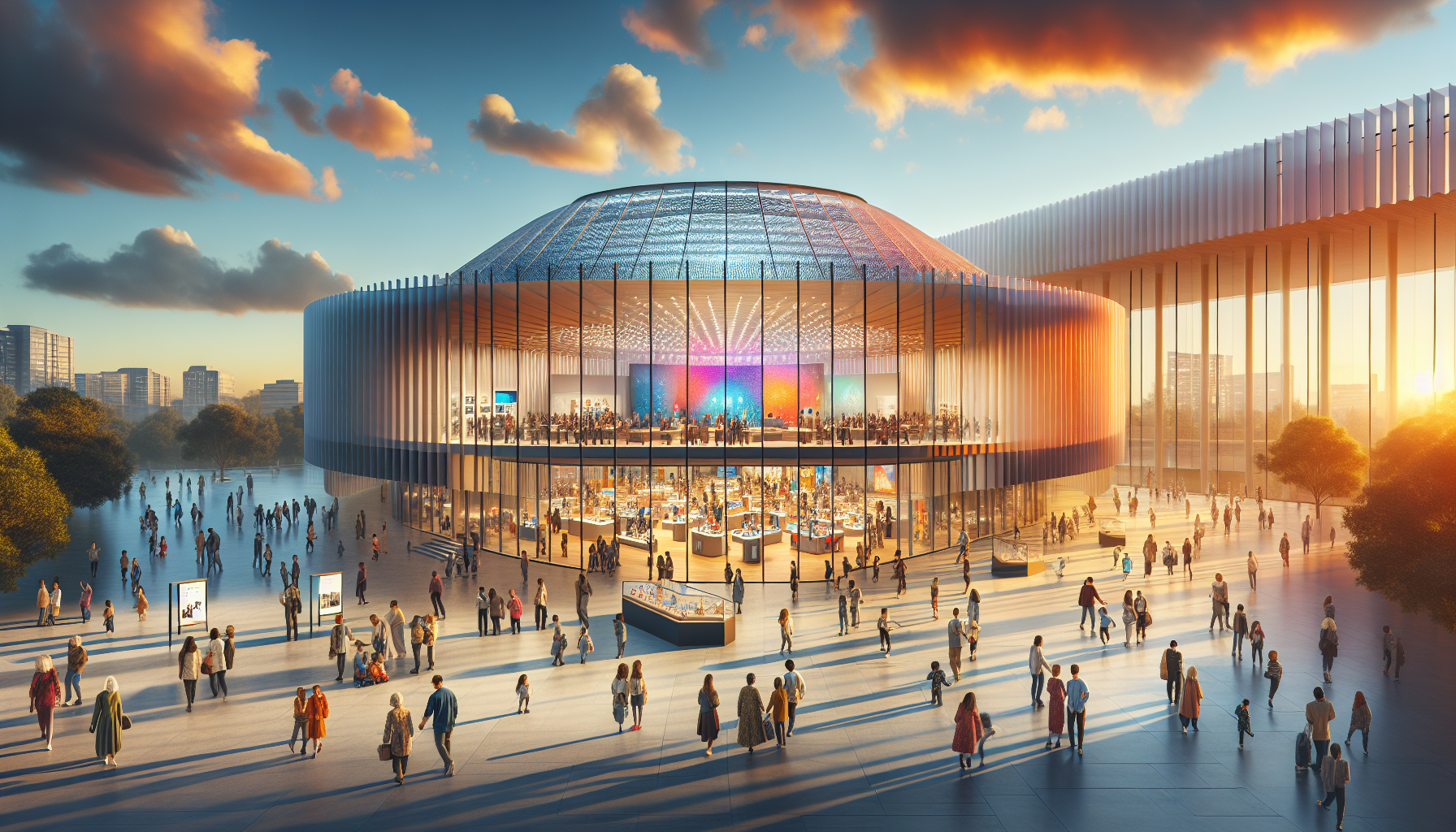
The Quiet Revolution: How Museums Are Transforming Beyond Recognition
In a world of digital saturation and entertainment overload, museums are staging an unexpected comeback—not as dusty repositories of the past, but as dynamic social spaces where culture, technology, and community converge. This article will guide you through the remarkable metamorphosis taking place in museums worldwide, revealing how these institutions are shedding their stuffy image to become hubs of innovation and social engagement. You’ll discover: how digital technologies are breaking down traditional barriers, how socially conscious exhibitions are tackling pressing global issues, and how museums are reinventing themselves as essential community anchors rather than optional cultural amenities.
As we explore these trends, you’ll gain insights into specific strategies that successful museums are employing—strategies that might challenge your preconceptions about what a museum can and should be. The transformation underway isn’t merely cosmetic; it represents a fundamental rethinking of the museum’s purpose in society. And as you’ll see, this quiet revolution might just hold valuable lessons for other institutions grappling with relevance in our rapidly changing world.
So put aside your mental image of hushed galleries and velvet ropes—the new museum experience might surprise you. Let’s examine how these centuries-old institutions are not just surviving but thriving by embracing contradiction, technology, and above all, human connection.
The Digital Paradox: How Technology Is Making Museums More Human
The notion that digital technology would render physical museums obsolete has proven to be one of the great cultural misconceptions of our time. Rather than competing with physical experiences, technology has become their greatest ally, creating what might be called the museum digital paradox: the more digital options available, the more valuable authentic, in-person experiences become.
Museums have recognized this counterintuitive truth, utilizing technology not as a replacement but as an enhancement to physical spaces. At the Cleveland Museum of Art, the ArtLens Gallery transforms visitors from passive observers into active participants. Through interactive displays, visitors can strike poses that match classical sculptures or experiment with digital drawing tools inspired by different artistic periods. “We’re not just showing art; we’re creating conversations between the art and the visitor,” explains Jane Alexander, the museum’s Chief Digital Information Officer.
This approach represents a fundamental shift in thinking. Rather than viewing technology as a threat to traditional museum experiences, forward-thinking institutions see it as a gateway to deeper engagement. The San Francisco Museum of Modern Art’s mobile app doesn’t simply provide audio tours—it uses location awareness to deliver content based on where visitors are standing, what they’ve already seen, and how much time they have available.
Perhaps most surprising is how digital technology has sparked renewed interest in physical artifacts. When the British Museum digitized its collection and made it available online, physical attendance didn’t decrease—it surged. People discover:ed items in the digital collection that intrigued them enough to visit in person, demonstrating that digital access serves as an appetizer rather than a main course.
“The digital experience creates anticipation for the physical one,” notes Neal Stimler, a digital humanities consultant. “People want both—the convenience and breadth of digital access, and the irreplaceable authenticity of standing before the real object.”
Social Conscience: Museums as Platforms for Change
The notion of museums as neutral spaces untouched by contemporary issues has undergone a dramatic reconsideration. Today’s most vibrant museums have embraced their potential as catalysts for social awareness and change—a role that might have been considered controversial or inappropriate in previous decades.
Take the approach of the International Slavery Museum in Liverpool, which doesn’t merely present historical artifacts but explicitly connects historical injustices to contemporary issues like human trafficking and racial discrimination. The museum’s director, Richard Benjamin, doesn’t shy away from this activist stance: “Museums have a responsibility not just to educate about the past but to inspire action in the present.”
This evolution reflects a broader philosophical shift. Museums are increasingly rejecting the myth of neutrality, recognizing that every curatorial decision—what to display, how to display it, and what narrative to construct around it—inherently contains political and social judgments.
The Whitney Museum of American Art demonstrated this new approach with its exhibition “An Incomplete History of Protest,” which examined how artists have confronted political and social issues throughout American history. Rather than presenting these works as historical curiosities, the exhibition drew explicit connections to contemporary movements like Black Lives Matter and #MeToo.
Even science and natural history museums have embraced more activist roles. The Natural History Museum in London redesigned its climate change exhibits to emphasize urgency and individual action, moving beyond dispassionate scientific explanation to encourage visitor engagement with one of the defining challenges of our time.
This shift hasn’t been without controversy. Critics argue that museums risk alienating visitors with different political perspectives or diminishing their scholarly authority. However, proponents counter that claiming neutrality often simply reinforces dominant perspectives while excluding marginalized voices.
“The question isn’t whether museums should engage with social issues,” says Lonnie Bunch, Secretary of the Smithsonian Institution. “The question is how they can do so in ways that foster dialogue rather than division, that illuminate complexity rather than simplifying it.”
The Membership Revolution: From Transactional to Relational
The traditional museum membership model—pay an annual fee, get free admission and a tote bag—is undergoing a profound reinvention. Forward-thinking institutions have recognized that today’s audiences seek more than transactional benefits; they crave genuine connection and co-creation opportunities.
This shift requires rethinking fundamental assumptions about the museum-visitor relationship. Rather than viewing members primarily as financial supporters, innovative museums now see them as community participants, collaborators, and even co-creators of the museum experience.
The Dallas Museum of Art pioneered this approach with its free membership program that focuses on engagement rather than financial contribution. Members earn points for participation—attending events, sharing reflections on exhibitions, or bringing friends to the museum. These points unlock special experiences, creating a virtuous cycle of deepening involvement.
“We wanted to move away from the idea that your relationship with the museum is determined by how much you can afford to pay,” explains Rob Stein, who helped develop the program. “The wealthiest person and someone with very limited means can have equally meaningful relationships with the institution based on their level of engagement.”
The Brooklyn Museum has taken a different approach, creating membership tiers based on interests rather than just price points. Members can choose packages focused on contemporary art, family programming, or social events, allowing the museum to create more tailored experiences while collecting valuable data about member preferences.
Perhaps most radically, some museums are experimenting with membership models that give constituents actual decision-making power. The Santa Cruz Museum of Art & History invites community members to participate in exhibition planning, challenging the traditional top-down curatorial approach.
This reconception of membership reflects a broader trend toward what marketing experts call “relationship marketing” rather than “transactional marketing.” In a world where consumers increasingly value experiences over possessions, museums are well-positioned to offer meaningful connections. But doing so requires abandoning outdated approaches that treat members merely as funding sources.
“The old model was: how do we get people to give us money?” notes Colleen Dilenschneider, a museum data analyst. “The new model asks: how do we create such meaningful experiences that people want to be part of our community and support naturally follows?”
Breaking the White Cube: Museums Beyond Their Walls
The concept of museums as cloistered temples of culture, separated from everyday life, is rapidly dissolving. Innovative institutions are literally breaking out of their architectural confines, creating experiences that extend far beyond their physical walls and traditional operating models.
This expansion takes multiple forms. Digital presence is the most obvious extension, with museums creating robust online experiences that complement in-person visits. But the more revolutionary changes involve physical presence in unexpected locations and times.
The Van Gogh Museum in Amsterdam, for instance, created pop-up experiences in shopping malls throughout Asia, bringing reproductions of masterpieces to audiences who might never visit the Netherlands. Rather than diminishing the museum’s prestige, these satellite experiences actually increased interest in the original works and established new relationships with international audiences.
Meanwhile, the Queens Museum in New York has reimagined its relationship with its local community by establishing semi-permanent satellite locations in neighborhood laundromats, storefronts, and community centers. These spaces host workshops, gather oral histories, and display exhibitions co-created with local residents.
“We’re turning the museum inside out,” explains Prerana Reddy, the museum’s Director of Public Programs. “Instead of waiting for the community to come to us, we’re embedding ourselves in the daily life of the neighborhood.”
The traditional operating hours of museums—typically 10 to 5, closed Mondays—are also being reconsidered. The Rubin Museum of Art in New York created “K2 Friday Nights” with extended hours, specialized programming, and a cocktail bar, attracting young professionals who might otherwise never visit. The program increased attendance by 25% on those evenings.
Even more radically, some museums are rethinking the very notion of having a permanent physical location. The Museum of Homelessness in London has no building at all, instead operating through pop-up exhibitions in various public spaces and community venues. This approach not only reduces overhead costs but also physically embodies the museum’s mission of highlighting housing instability.
These innovations reflect a fundamental shift in thinking about the museum’s role in society. Rather than expecting people to make special journeys to a cultural shrine, museums are integrating themselves into the rhythms and spaces of everyday life.
“The future of museums isn’t about getting more people to come to the museum,” argues Nina Simon, author of “The Art of Relevance.” “It’s about bringing the museum—its collections, its expertise, its ability to create meaning—to where people already are.”
The Paradox of Authenticity: Why the Original Still Matters
In an age when virtual reality can transport us to ancient Rome and 3D printing can replicate artifacts with microscopic precision, one might expect original objects to lose their special status. Yet paradoxically, the proliferation of digital reproductions has actually enhanced the value people place on authentic encounters with original items.
This phenomenon reflects what philosopher Walter Benjamin identified nearly a century ago as the “aura” of original works—the sense of uniqueness and historical continuity that cannot be replicated. Digital technologies have not diminished this aura; they’ve heightened our awareness of it.
The Louvre’s experience with Leonardo da Vinci’s “Mona Lisa” demonstrates this principle. Despite being one of the most reproduced images in human history—available in countless digital forms—the painting still draws enormous crowds who wait hours for a brief glimpse of the original. The painting’s ubiquity in digital form doesn’t satisfy curiosity; it stimulates it.
Museums are learning to leverage this paradox rather than fight it. The Smithsonian Institution has created highly detailed 3D scans of many artifacts, allowing people worldwide to examine them closely online or even print replicas. Far from reducing interest in the originals, this digital access has increased it.
“We find that people who engage with our collections digitally are more likely to visit in person, not less,” explains Günter Waibel, Director of the Smithsonian Digitization Program Office. “The digital experience creates appetite for the authentic one.”
This insight has led to new exhibition strategies that emphasize what makes physical encounters special. The Cooper Hewitt Design Museum in New York places digital tools alongside physical objects, allowing visitors to explore designs in ways that would be impossible with the original alone—zooming in on details, changing colors, or seeing related items from the collection. The original object remains central, but digital enhancements provide context that deepens appreciation.
The ultimate expression of this approach may be found in museums that create explicitly hybrid experiences. The Atelier des Lumières in Paris offers immersive digital projections of famous artworks, transforming entire rooms into living canvases. Rather than replacing visits to traditional museums, these experiences often inspire them, serving as gateways to deeper engagement with original works.
“What’s emerging isn’t an either/or situation between digital and physical,” notes Maxwell Anderson, former director of the Dallas Museum of Art. “It’s a both/and world where each enhances the other.”
Beyond Visitors: Redefining the Museum-Public Relationship
For centuries, museums have categorized the public primarily as “visitors”—temporary guests who enter the institution’s space on terms set by curators and administrators. This fundamental framing is now being challenged by institutions that see the public not merely as visitors but as participants, collaborators, and stakeholders in the museum itself.
This shift goes beyond semantic preference; it represents a profound rethinking of power relationships between cultural institutions and their communities. The Santa Cruz Museum of Art & History exemplifies this approach through its community-curated exhibitions, where local residents determine themes, select objects, and craft narratives alongside professional staff.
“We’re moving from a model where the museum does things FOR the community to one where we do things WITH the community,” explains Nina Simon, the museum’s former executive director. “This doesn’t diminish curatorial expertise; it combines it with community knowledge to create something neither could achieve alone.”
This collaborative approach has proven especially powerful for engaging groups traditionally underrepresented in museum audiences. The Oakland Museum of California developed its exhibition on the Black Panthers movement by forming an advisory council of former Panthers, scholars, and community activists who shaped every aspect of the presentation.
Even more radically, some museums are experimenting with governance structures that formally share decision-making authority. The Wing Luke Museum of the Asian Pacific American Experience in Seattle operates through a Community Advisory Committee that has final approval over all exhibition proposals, ensuring community perspectives remain central to the institution’s work.
These approaches challenge long-held assumptions about professional authority and institutional autonomy. Critics worry about potential compromise of scholarly standards or capitulation to political pressures. Proponents counter that meaningful engagement actually strengthens the museum’s intellectual integrity by incorporating diverse perspectives and expanding the range of expertise informing museum work.
“The question isn’t whether community involvement threatens museum standards,” argues Elaine Heumann Gurian, a museum consultant. “The question is whether our definition of ‘standards’ has been too narrow and exclusionary in the first place.”
Conclusion: The Museum Reimagined
The transformation of museums from staid repositories to dynamic cultural hubs represents one of the most successful institutional reinventions of our time. By embracing seeming contradictions—using digital technology to enhance physical experiences, maintaining scholarly rigor while engaging with social issues, honoring tradition while constantly innovating—museums have found a path to renewed relevance and sustainability.
This evolution offers valuable lessons that extend far beyond the cultural sector. In an era when many legacy institutions struggle with changing demographics, digital disruption, and questions of social purpose, museums provide a compelling model of adaptation without abandonment of core values.
The most successful museums have recognized that what appears to be a choice between opposing values—scholarly excellence versus accessibility, preservation versus innovation, curatorial authority versus community engagement—is actually a false dichotomy. The future belongs to institutions that embrace these tensions as creative forces rather than problems to resolve.
As you consider your next museum visit, look beyond the exhibits themselves to observe how the institution navigates these balancing acts. You might find that the museum itself—its approach to technology, community, and the visitor experience—is as interesting as anything in its collection.
The quiet revolution in museums reminds us that even our oldest cultural institutions can reinvent themselves while honoring their essential purpose. In that sense, museums aren’t just preserving history—they’re making it.
If you’ve enjoyed this article it would be a huge help if you would share it with a friend or two. Alternatively you can support works like this by buying me a Coffee