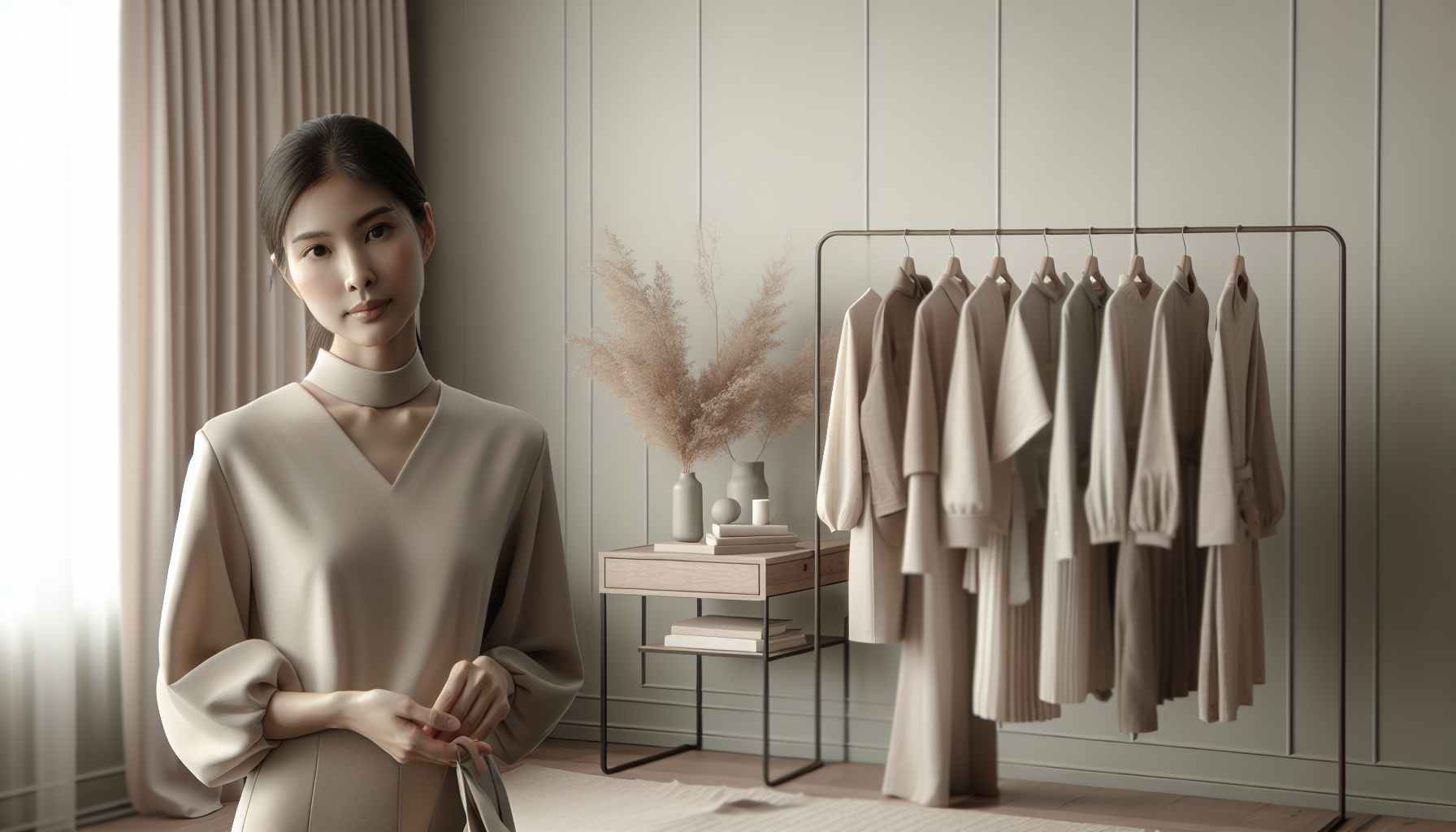
In a world dominated by excess, could less truly be more? As we stand on the precipice of a fashion revolution, a whisper of change is growing into a resounding call for simplicity. The rise of minimalism in fashion isn’t just about clean lines and neutral palettes; it’s a reflection of a broader societal shift that promises to redefine our relationship with clothing, consumption, and culture itself.
The Birth of a Movement: Minimalism’s Emergence in Fashion
Picture a closet bursting with clothes, yet nothing to wear. Sound familiar? This common paradox has become the catalyst for a seismic shift in the fashion world. Minimalism, with its ’less is more’ philosophy, is stepping into the spotlight, challenging our notions of style and substance.
Brands like The Row and COS have become the standard-bearers of this movement, crafting collections that whisper luxury rather than scream it. Their designs, characterized by understated elegance and timeless silhouettes, are more than just clothes – they’re a statement against the cacophony of fast fashion.
But what if this trend is more than just a passing fad? What if it’s a harbinger of a more profound change in our society?
Sustainability in Style: Minimalism’s Green Credentials
As the fashion industry grapples with its environmental impact, minimalism emerges as an unlikely hero in the sustainability narrative. By encouraging consumers to invest in fewer, higher-quality pieces, this philosophy is subtly combating the throwaway culture that has dominated fashion for decades.
The use of organic cotton, recycled materials, and eco-friendly dyes in minimalist fashion lines isn’t just a nod to sustainability – it’s a bold statement about the future of fashion. As reported by the Ellen MacArthur Foundation, this shift towards sustainable practices could be the key to transforming the industry’s environmental footprint.
But can a movement built on ’less’ truly have more impact?
Beyond the Closet: Minimalism’s Cultural Ripple Effect
The minimalist movement in fashion is just the tip of the iceberg. This philosophy has seeped into various aspects of our lives, from our homes to our digital spaces. The popularity of capsule wardrobes – curated collections of interchangeable items – is a testament to this broader cultural shift.
Marie Kondo, in her bestseller “The Life-Changing Magic of Tidying Up,” encapsulates this sentiment perfectly: “The question of what you want to own is actually the question of how you want to live your life.” This simple yet profound statement underscores the deeper implications of the minimalist movement.
As we declutter our closets, are we also decluttering our minds? And what unexpected benefits might this mental clarity bring?
Quiet Luxury: Minimalism’s Influence on High Fashion
In an intriguing twist, minimalism has not only challenged fast fashion but has also made its mark on the luxury sector. The concept of ‘quiet luxury’ – an extension of minimalist principles – focuses on understated elegance rather than ostentatious displays of wealth.
Luxury brands like Bottega Veneta and Hermes have embraced this trend, creating pieces that exude refinement without obvious branding. As noted in analyses by McKinsey & Company, this shift reflects a changing perception of luxury itself – one that values craftsmanship and quality over conspicuous consumption.
But does this trend signal a democratization of luxury, or is it creating a new, more subtle form of exclusivity?
The Paradox of Minimalist Fashion
Here’s where things get interesting. Minimalism in fashion presents us with a delightful paradox: by limiting our choices, we actually expand our possibilities. A carefully curated wardrobe of versatile, high-quality pieces can offer more outfit combinations than a closet stuffed with trend-driven items.
This counterintuitive approach to fashion challenges us to think differently about our relationship with clothes. It’s not about deprivation, but about liberation – freedom from the tyranny of trends and the pressure to constantly consume.
The Intersection of Fashion and Philosophy
Minimalism in fashion is more than just an aesthetic choice – it’s a philosophy that touches on fundamental questions about identity, self-expression, and our relationship with material possessions. It challenges us to consider: Do our clothes define us, or do we define our clothes?
This movement encourages us to see our wardrobes as a form of curation rather than accumulation. It’s about choosing pieces that truly resonate with our personal style and values, rather than blindly following trends.
The Global Impact: Minimalism Across Cultures
While minimalism has gained significant traction in Western fashion, its influence is far from limited to one cultural context. In fact, many minimalist principles align with traditional aesthetics from various cultures around the world.
For instance, the Japanese concept of ‘ma’ – which refers to the meaningful use of negative space – has long influenced minimalist design. Similarly, the Scandinavian philosophy of ’lagom’ (not too little, not too much) resonates deeply with minimalist ideals.
This cross-cultural appeal raises an intriguing question: Could minimalism in fashion serve as a unifying force in an increasingly globalized world?
The Future of Fashion: Minimalism’s Long-term Prospects
As we look to the future, the question arises: Is minimalism in fashion here to stay, or is it just another trend destined to fade? The answer may lie in its ability to adapt and evolve.
Already, we’re seeing variations on the minimalist theme. ‘Maximalist minimalism,’ for instance, combines the clean lines of minimalism with bold colors or patterns. This evolution suggests that minimalism isn’t a rigid set of rules, but a flexible philosophy that can accommodate individual expression.
Conclusion: The Quiet Revolution Continues
As we stand at this fashion crossroads, minimalism offers us a path forward that aligns with our growing desire for sustainability, simplicity, and mindful consumption. It challenges us to rethink our relationship with fashion, encouraging us to value quality over quantity, timelessness over trendiness.
The rise of minimalism in fashion is more than just a trend – it’s a quiet revolution that’s reshaping our wardrobes and our world. As we embrace this philosophy, we’re not just changing how we dress, but how we live.
So, as you stand before your closet tomorrow morning, ask yourself: What story do you want your clothes to tell? In the end, the power of minimalist fashion lies not in what it adds to our lives, but in what it takes away – the noise, the excess, the unnecessary – leaving us with only what truly matters.
In a world that often equates more with better, minimalism dares to suggest otherwise. And in doing so, it just might be ushering in a new era of fashion – one where less truly is more.
If you’ve enjoyed this article it would be a huge help if you would share it with a friend or two. Alternatively you can support works like this by buying me a Coffee