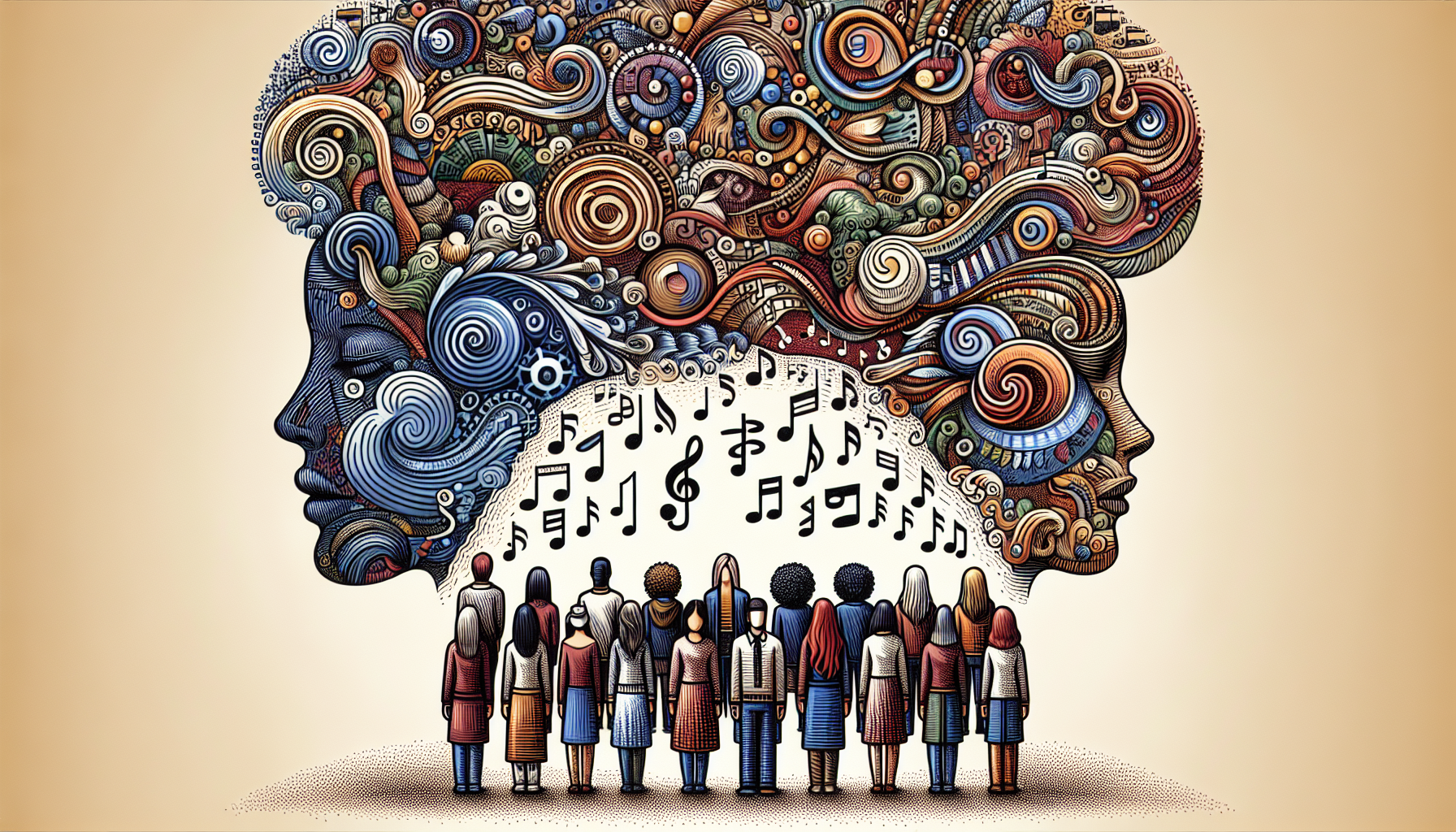
The Hidden Symphony of Teams: Unlocking Superior Group Performance Through Shared Mental Maps
In today’s complex organizational landscape, the difference between mediocre and exceptional team performance often lies not in individual brilliance but in something far more subtle: the shared understanding that develops between team members. This article will take you on a journey through the fascinating world of team cognition, revealing how shared mental models—those invisible frameworks of collective understanding—drive success in everything from corporate boardrooms to emergency response units. You’ll discover: why some teams seem to read each other’s minds while others stumble through miscommunication, and how leaders can deliberately cultivate this cognitive alignment.
As we explore this terrain, you’ll learn practical approaches to fostering shared understanding within your own teams, including communication techniques that transcend typical corporate speak, assessment methods that reveal cognitive gaps, and training strategies that build mental synchronicity. The research presented here might challenge your assumptions about team building—suggesting that social bonding, while valuable, may matter less than cognitive alignment in certain high-stakes contexts.
The story of team cognition is one of invisible connections becoming visible through performance. Whether you lead a team, participate in one, or simply find yourself fascinated by group dynamics, the principles discussed here offer a fresh lens for understanding collective achievement. Read on to discover: how the mental maps we share ultimately determine the destinations we reach together.
When Minds Align: The Foundation of Team Cognition
In the control room of NASA’s Mission Control during the Apollo 13 crisis, flight director Gene Kranz didn’t need to explain every technical detail as his team worked to bring the astronauts home safely. A shared understanding permeated the room—each specialist knew not only their role but how it connected to others’. This wasn’t coincidence or mere experience; it exemplified what researchers now recognize as “team cognition.”
Team cognition represents the collective mental processing that occurs when individuals operate as a coordinated unit. Unlike the simple aggregation of individual knowledge, it’s about how knowledge is distributed, shared, and ultimately synchronized across team members. Cannon-Bowers and Salas, pioneers in this field, defined team cognition as “knowledge structures held by members of a team that enable them to form accurate explanations and expectations for the task, and in turn, to coordinate their actions and adapt their behavior to demands of the task and other team members” (1998, p. 235).
This cognitive alignment doesn’t happen by accident. It emerges through experience, communication, and deliberate practice. The fascinating aspect is how it manifests—often without explicit coordination. Teams with well-developed cognitive alignment show a remarkable ability to anticipate needs, compensate for weaknesses, and adapt to changing circumstances without lengthy discussions.
“When team members hold compatible mental models, they are able to draw similar conclusions about the state of their environment and can coordinate implicitly,” explains psychologist Eduardo Salas (2015, p. 42). This implicit coordination becomes particularly crucial in high-pressure environments where there simply isn’t time for extended communication.
Consider surgical teams performing emergency procedures. The best teams operate with minimal verbal communication—a glance or slight gesture conveys volumes between professionals who share understanding about procedures, patient needs, and potential complications. Similar patterns emerge in elite sports teams, military units, and high-performing business teams.
Yet this alignment remains elusive for many organizations. Teams often struggle not because they lack talent or effort, but because their cognitive frameworks remain misaligned. As we’ll see in the coming sections, this invisible cognitive architecture ultimately determines whether a team will flourish or flounder when facing its greatest challenges.
The Anatomy of Shared Mental Models: More Than Just “Getting Along”
The brain’s neural networks create pathways for thoughts to travel—establishing connections that, once formed, allow for faster processing. Teams develop similar networks, not biologically but cognitively, forming what researchers call shared mental models. These collective frameworks allow information to flow efficiently between members, creating a team “nervous system” that responds with coordinated precision.
Contrary to popular management wisdom, team effectiveness isn’t primarily about members liking each other. While interpersonal chemistry matters, research consistently shows that cognitive alignment—shared mental models about tasks, processes, and responsibilities—predicts performance more reliably than social cohesion alone.
“The strongest predictor of team performance is not how well teammates get along but rather how well they understand the nature of the task and each other’s roles,” notes organizational psychologist J. Richard Hackman (2011, p. 83). This finding contradicts the common corporate fixation on team-building activities focused exclusively on interpersonal bonding.
Shared mental models generally fall into several categories:
Task models relate to the work itself—shared understanding of objectives, procedures, and standards. When a software development team debates architectural decisions, they’re refining their task model.
Team models encompass knowledge about teammates—their strengths, weaknesses, preferences, and typical responses. The quarterback who knows precisely how each receiver runs routes operates from a refined team model.
Process models address how the team functions—communication patterns, decision-making approaches, and coordination strategies. Emergency response teams with clear process models know exactly how information flows during a crisis.
Equipment models involve shared understanding of tools and technology. Airline crews with well-developed equipment models respond seamlessly to complex aircraft systems.
The development of these models follows recognizable patterns. Initially, team members bring individual mental models based on prior experience. Through interaction, these models begin to converge, creating overlapping understanding. This convergence doesn’t mean identical thinking—diversity of perspective remains valuable—but rather compatibility that enables coordination.
“Effective teams don’t necessarily think alike on all matters, but they develop sufficient common ground to interpret situations similarly and anticipate each other’s actions,” explains cognitive scientist Mica Endsley (2018, p. 117). This subtle distinction helps explain why diverse teams can outperform homogeneous ones while still maintaining cognitive alignment.
As we’ll explore next, this alignment isn’t merely theoretical—it manifests in observable behaviors that distinguish high-performing teams from their struggling counterparts.
Observable Symptoms of Cognitive Harmony and Discord
The presence or absence of shared mental models reveals itself through distinct patterns of team behavior. Like a physician diagnosing a condition through its symptoms, astute observers can identify cognitive alignment by watching how teams operate under varying conditions.
When shared mental models are robust, teams exhibit what researchers call “implicit coordination”—the ability to adjust actions based on teammates’ needs without explicit communication. Basketball players who seamlessly shift positions as play develops, anticipating both opponents’ moves and teammates’ responses, demonstrate this quality. In workplace settings, it appears when team members proactively provide information or assistance before being asked.
“The hallmark of a team with well-developed shared mental models is the fluidity with which they handle unexpected events,” notes cognitive psychologist Gary Klein (2017, p. 109). “They seem to read each other’s minds, making coordinated adjustments that maintain performance even as conditions deteriorate.”
Conversely, teams lacking shared mental models display telling symptoms:
- Repetitive clarification requests (“What exactly do you mean by that?”)
- Misaligned priorities and conflicting actions
- Surprise at teammates’ decisions (“I had no idea you were planning to do that”)
- Excessive explanations for basic procedures
- Paralysis during unexpected events
A particularly revealing diagnostic occurs during transitions between activities or responding to disruptions. Teams with strong shared mental models recover: quickly, adapting with minimal explicit coordination. Those without such models often fragment, with members retreating to individual efforts rather than maintaining collective function.
Research by psychologist Nancy Cooke revealed that even highly skilled individuals form ineffective teams when they lack shared understanding. Her studies of military command teams showed that technical expertise couldn’t compensate for cognitive misalignment. “Individual skill is necessary but insufficient,” Cooke concluded (2015, p. 62). “The cognitive integration of team members—their ability to form accurate shared mental models—ultimately determines performance.”
Perhaps most tellingly, teams with well-developed shared mental models can articulate not only what they’re doing but why—and they tend to provide similar explanations. When asked about priorities or approaches, members offer complementary rather than contradictory responses.
These observable symptoms provide a diagnostic framework for leaders seeking to understand team effectiveness. The question then becomes: how can organizations deliberately foster these shared cognitive structures?
Engineering Convergence: Strategies for Building Shared Understanding
Developing shared mental models doesn’t happen by accident. While some teams naturally develop cognitive alignment through extended collaboration, deliberate strategies can accelerate this process and strengthen outcomes.
Strategic Communication Practices
The language teams use shapes their collective understanding. Teams with strong shared mental models often develop specialized vocabulary and communication shortcuts—not to exclude outsiders, but to convey complex information efficiently.
Military and emergency services have long recognized this through standardized communication protocols. The aviation industry’s implementation of Crew Resource Management (CRM) demonstrates how structured communication enhances safety by ensuring shared understanding during crises.
“When we implemented standardized communication practices across surgical teams,” explains physician Atul Gawande (2014, p. 173), “we saw not just better information exchange but evidence of more aligned understanding about patient status and treatment priorities.”
Organizations can foster similar alignment through:
- Brief-backbrief cycles: Team members summarize their understanding of instructions or information, revealing misalignments before they cause problems.
- Shared glossaries: Establishing common definitions for key terms eliminates ambiguity.
- Cross-hierarchical communication channels: Ensuring information flows freely regardless of rank or position.
- Structured after-action reviews: Dissecting both successes and failures to refine shared understanding.
Experiential Learning and Simulation
Perhaps no approach builds shared mental models more effectively than navigating challenges together. High-reliability organizations like nuclear power plants and aircraft carriers use simulation extensively, not merely to build individual skills but to develop collective understanding.
“Simulations reveal gaps in shared understanding that remain invisible during routine operations,” notes safety researcher Karl Weick (2016, p. 88). “Teams discover: misalignments in a controlled environment rather than during actual crises.”
Companies like Pixar use a similar approach through “dailies”—regular reviews where animation teams collectively evaluate work-in-progress, developing shared aesthetic understanding through concrete examples rather than abstract guidelines.
Technological Scaffolding
Digital tools can serve as external cognitive supports that help align mental models. Visual management systems like Kanban boards make work visible to all team members, while collaborative documents provide shared reference points.
More sophisticated approaches include:
- Team knowledge repositories: Centralized collections of lessons learned, procedures, and decision criteria.
- Annotation systems: Tools allowing team members to share their thinking about documents or designs.
- Process visualization: Graphical representations of workflows and dependencies.
- Decision support systems: Structured frameworks that guide teams through complex decisions.
“Technology works best not when it replaces human coordination but when it makes team members’ thinking visible to each other,” explains cognitive engineer David Woods (2018, p. 142). “The goal is cognitive transparency—allowing team members to see how others understand the situation.”
Leadership Practices
Leaders play a crucial role in fostering shared mental models through:
- Articulating unifying frameworks: Providing conceptual structures that help team members organize their understanding.
- Making thinking visible: Explaining not just decisions but the reasoning behind them.
- Encouraging questioning: Creating psychological safety for members to test their understanding.
- Narrative construction: Using stories to convey complex ideas in memorable ways.
When Satya Nadella became Microsoft’s CEO, he articulated a clear mental model around “mobile-first, cloud-first” that helped align thousands of employees around a shared vision of the company’s future. Such frameworks give teams collective reference points for decision-making.
The strategies above don’t merely improve communication—they fundamentally reshape how teams think together. As we’ll explore next, measuring this cognitive alignment provides crucial insights into team capability.
Measuring the Invisible: Assessing Shared Mental Models
How do you measure something as intangible as shared understanding? This challenge has driven researchers to develop innovative techniques for assessing the degree of cognitive alignment within teams.
Traditional team assessments focus on observable outcomes or interpersonal dynamics. While valuable, these approaches miss the cognitive foundation that enables high performance. Modern assessment techniques delve deeper, revealing the hidden architecture of team cognition.
Concept Mapping requires team members to visually represent their understanding of a domain or process, creating diagrams showing concepts and relationships. Comparing these maps reveals areas of alignment and divergence. Researchers Katherine Klein and Joan Ziegert found that teams whose concept maps showed greater similarity demonstrated superior performance in complex problem-solving tasks (2012, p. 211).
Situational Judgment Tests present team members with scenarios and ask how they would respond. Consistency in responses indicates shared understanding of appropriate actions. These tests prove particularly valuable for teams operating in high-risk environments.
Communication Analysis examines patterns in team interactions, identifying signatures of shared understanding. Teams with well-developed mental models use fewer words to convey information, engage in more anticipatory communication, and show greater linguistic convergence over time.
“When team members share mental models, their communication becomes increasingly efficient,” explains psychologist Leslie DeChurch (2019, p. 76). “They require less explicit coordination because they can predict each other’s information needs.”
Cross-understanding Assessments ask team members to predict how their colleagues would respond to questions about tasks or priorities. Higher accuracy in these predictions correlates with stronger team performance. This approach highlights not just shared knowledge but awareness of how that knowledge is distributed across the team.
Performance Under Constraint tests how teams function when normal communication channels are limited. Teams with robust shared mental models maintain effectiveness even when unable to communicate freely, revealing the depth of their cognitive alignment.
These assessment approaches serve multiple purposes. Diagnostically, they identify cognitive gaps that might compromise performance. Developmentally, they guide targeted interventions to strengthen shared understanding. Predictively, they indicate a team’s readiness for complex challenges.
“The most powerful insight from measuring shared mental models is discover:ing not just what team members know, but how their knowledge fits together,” notes organizational researcher Amy Edmondson (2017, p. 128). “It’s the configuration of understanding, not merely its content, that enables exceptional performance.”
As teams and organizations embrace these measurement approaches, they gain unprecedented visibility into the cognitive foundations of performance—allowing for more precise development of this crucial capability.
The Future of Team Cognition: Emerging Frontiers
As work becomes increasingly complex and technology reshapes collaboration, the frontier of team cognition continues to evolve. Several emerging developments promise to transform how we understand and foster shared mental models.
Artificial Intelligence as Cognitive Partners
The integration of AI into teams creates new possibilities and challenges for shared understanding. Rather than merely providing information, advanced AI systems participate in team cognition, necessitating new forms of human-machine cognitive alignment.
“The most effective human-AI teams will develop bidirectional shared mental models,” predicts cognitive scientist David Kirsh (2020, p. 93). “Humans will understand AI capabilities and limitations, while AI systems will be designed to grasp human conceptual frameworks.”
Organizations at the forefront of this integration are discover:ing that transparency in AI reasoning is crucial for developing shared understanding. When human team members cannot comprehend why an AI system makes specific recommendations, cognitive alignment breaks down.
Distributed Teams and Virtual Collaboration
As teams become increasingly distributed across geography and time zones, building shared mental models faces new hurdles. The subtle cues that facilitate cognitive alignment in co-located teams—observing reactions, impromptu conversations, shared experiences—must be deliberately recreated in virtual environments.
Research by Judith Olson and Gary Olson suggests that geographically distributed teams require more explicit attention to developing shared understanding. “Distance amplifies cognitive differences,” they note (2014, p. 217). “What remains implicit in co-located teams must become explicit in distributed ones.”
Companies like Automattic (WordPress) and GitLab, which operate with fully distributed workforces, have pioneered approaches to building shared mental models across distance. These include detailed documentation of decision-making processes, asynchronous communication protocols, and regular synchronization periods.
Neurological Insights and Team Neuroscience
Advances in neuroscience are beginning to provide biological insights into team cognition. Using techniques like hyperscanning (simultaneously measuring brain activity across multiple individuals), researchers have identified neural signatures of team synchronization.
“We’re discover:ing that effective teamwork creates measurable neural alignment between team members,” explains neuroscientist Emmanuelle Tognoli (2021, p. 143). “The brains of teammates literally begin to synchronize during collaborative tasks.”
While still emerging, this field suggests fascinating possibilities for understanding and enhancing team cognition. Future training approaches might incorporate neurofeedback to help teams develop cognitive alignment more efficiently.
Cross-cultural Dimensions of Shared Mental Models
As teams become increasingly global, the cultural foundations of mental models gain importance. Different cultures embed different assumptions about coordination, communication, and decision-making into their members’ cognitive frameworks.
“Effective global teams don’t erase cultural differences in mental models,” observes cross-cultural researcher Erin Meyer (2016, p. 175). “Instead, they develop meta-models that help members translate between different approaches.”
Organizations leading in this area create explicit maps of cultural variations in thinking, helping team members navigate cognitive differences rather than attempting to eliminate them.
These emerging frontiers suggest that the field of team cognition remains vibrant and evolving. As our understanding deepens, organizations that master the art and science of building shared mental models will gain increasing advantages in an environment where collective intelligence determines success.
Conclusion: The Cognitive Foundation of Collective Excellence
The invisible architecture of shared understanding ultimately determines which teams excel and which merely function. As we’ve explored throughout this article, the development of shared mental models isn’t simply a theoretical concern—it’s the practical foundation upon which exceptional teamwork builds.
The research reveals a consistent pattern: when team members develop aligned understanding of tasks, processes, and each other’s capabilities, they gain the ability to coordinate implicitly,
If you’ve enjoyed this article it would be a huge help if you would share it with a friend or two. Alternatively you can support works like this by buying me a Coffee