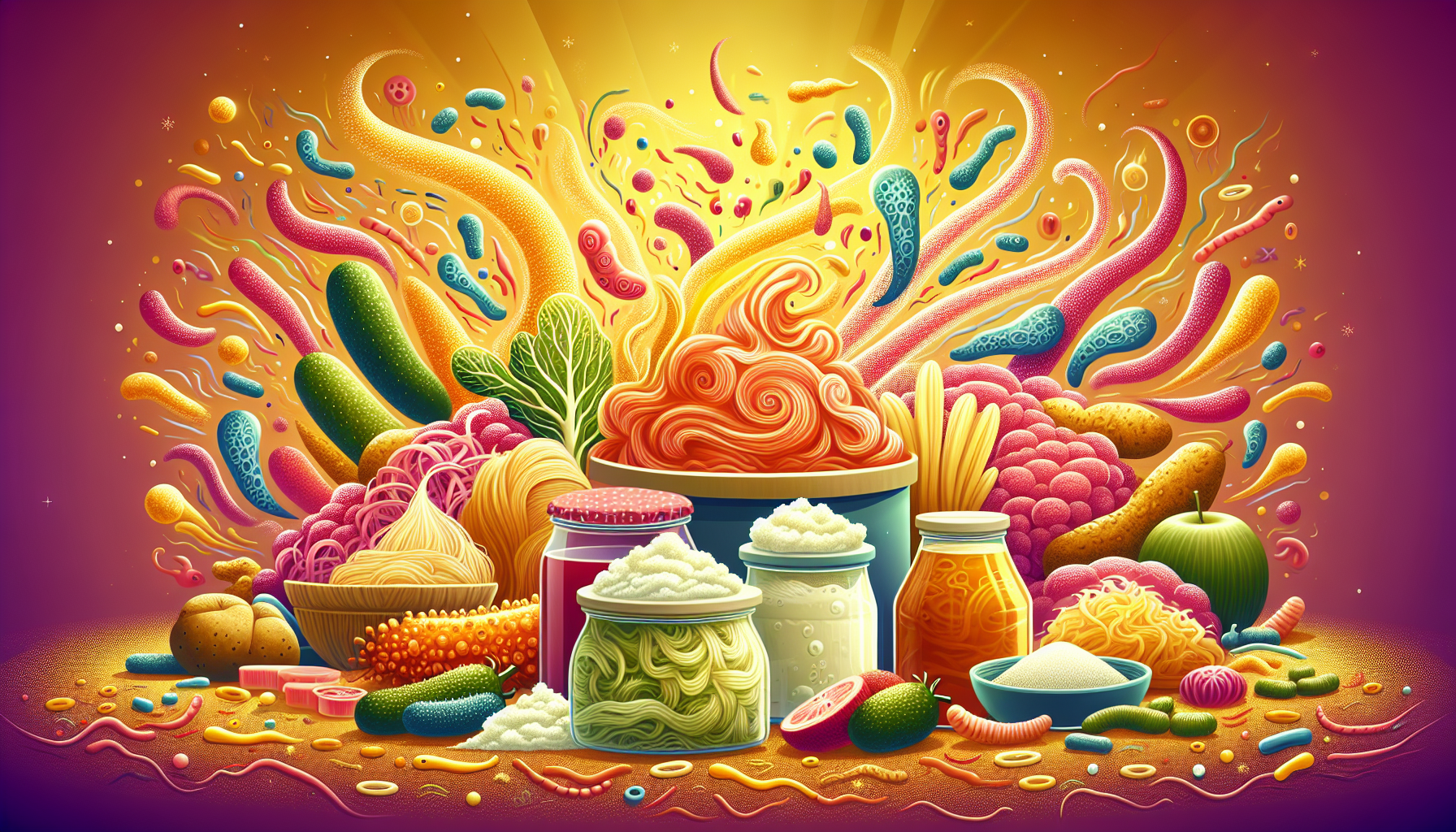
Are you ready for an awesome adventure that will totally change how you think about health, food, and your tummy? Get ready to dive into the super cool world of fermented foods and how they rock your gut! We’re talking about old-school food tricks that are now super popular with scientists because they’re packed with amazing benefits.
We’re going to explore the secret dance between good bacteria and your tummy. You’ll see how just eating some fermented goodies can make your whole body feel awesome. We’ll learn about the secret lives of probiotic powerhouses, uncover: the magic of fermentation, and show you how these foods can seriously boost the good stuff in your gut – which is super important for your health!
But this isn’t just about adding yogurt to your day. We’re going to question everything you thought you knew about food! From how fermented foods can help with tummy troubles to the crazy connections between your gut and your overall health, this is going to be a fun and mind-blowing journey for you and your tiny gut friends.
So, grab your imaginary microscope and get ready to see your food in a whole new light. Your gut adventure starts now! By the end of this, you might even look at that jar of kimchi in your fridge with major respect – and a hungry tummy ready for some microbial love!
The Probiotic Superheroes: Meet Your Tiny Allies
Imagine a world where tons of tiny creatures work hard to keep you healthy, fighting off bad guys and making important stuff your body needs. This isn’t a movie – it’s happening inside you right now! The stars of this show? Probiotic bacteria, the awesome microorganisms found in fermented foods.
These bacterial buddies, mostly from the Lactobacillus and Bifidobacterium families, are the unsung heroes of your tummy. They’re like the super important crew members of a play – you don’t always see them, but the show wouldn’t go on without them.
“Probiotic bacteria have a big impact on your gut,” says a study from the Journal of Clinical Gastroenterology in 2022. “These little guys are key to keeping your tummy happy and making you feel great.”
But what exactly do these microscopic marvels do? They’re super multi-taskers:
- They help break down food, making it easier for your body to use the good stuff.
- They make vitamins and other helpful things.
- They make your immune system stronger by creating a shield in your gut.
- They can even affect your mood and how you feel through the gut-brain connection!
Take yogurt, for example. This yummy treat is more than just a snack – it’s a probiotic powerhouse! The live cultures in yogurt can help you digest lactose, which is awesome for people who can’t handle dairy well. It’s like having a team of tiny dairy-eating helpers in your gut!
But here’s the coolest part: probiotics aren’t just good for your tummy. Research shows that these good bacteria might help with everything from your skin to your mental health. It’s like we’ve found a secret control center in our bodies, and fermented foods are the key to unlocking its full potential!
The Magic of Fermentation: Turning Food into Superfood
Let’s peek behind the curtain at the amazing process of fermentation. This ancient trick isn’t about letting food go bad – it’s about turning it into a nutritional treasure! It’s like turning something ordinary into gold – but in this case, we’re turning regular food into probiotic-rich superfoods.
Fermentation is like throwing a huge party for beneficial bacteria. As these tiny guests hang out and multiply, they break down sugars and starches, making all sorts of helpful stuff. It’s a biological magic trick that not only keeps food from spoiling but also makes it even healthier.
According to a 2021 study in the Food Microbiology Journal, “Fermentation creates tons of bioactive compounds, like vitamins, peptides, and organic acids, which are super good for your tummy.”
Let’s check out some of the goodies these bacterial guests leave behind:
- Vitamins: Lots of fermented foods are packed with B vitamins, including B12, which is super important for energy and your brain.
- Bioactive peptides: These tiny protein pieces can have all sorts of health benefits, like lowering blood pressure and fighting inflammation.
- Organic acids: Things like lactic acid and acetic acid give fermented foods their tangy taste and also create a place where good bacteria can thrive while keeping bad bacteria away.
Think about miso, the fermented soybean paste used in Japanese cooking. This flavorful ingredient is more than just a taste booster – it’s a probiotic playground! Fermentation turns the simple soybean into a super nutritious food, packed with helpful stuff that can boost your gut.
And here’s the kicker: fermented foods don’t just have good bacteria – they also make stuff that acts as prebiotics, which is basically food for the good bacteria already in your gut! It’s like sending your inner microbiome a care package, complete with reinforcements and yummy snacks!
Diversity: The Key to a Happy Gut
Let’s zoom out and look at the big picture. When it comes to your gut, having lots of different types of bacteria isn’t just good – it’s essential! A diverse gut microbiome is like a thriving ecosystem, where each species plays a special role in keeping things balanced and healthy.
Eating lots of different fermented foods is like throwing an international potluck for your gut bacteria. Each dish brings something unique, introducing new types of good bacteria and helping to create a more diverse microbial community.
A 2020 review in Nature Reviews Gastroenterology & Hepatology says it best: “Having a diverse gut microbiome is linked to better health and a lower risk of certain diseases.”
But why is diversity so important? Let’s break it down:
- Resilience: A diverse microbiome is better at handling stress and fighting off potential bad bacteria.
- Backup System: Different types of bacteria can do similar things, making sure important processes keep going even if one type is struggling.
- Versatility: Having a wider range of bacteria means a wider range of things your gut can do, which can help you absorb nutrients better and improve your overall health.
Take kimchi, for example. This spicy Korean dish is like a microbial melting pot, full of all sorts of good bacteria. Every bite sends different types of probiotics to your gut, helping to boost the overall diversity of your microbiome.
And here’s the coolest part: the benefits of a diverse microbiome go way beyond your tummy. Research suggests that microbiome diversity might help with everything from your immune system to your mental health. It’s like your gut is a hidden puppet master, pulling strings that affect your entire body!
From Tummy Troubles to Awesome Health: Unveiling the Digestive Benefits
Let’s get down to the nitty-gritty. For many of us, tummy troubles can be a real pain, turning meals into stressful events. But what if the solution was right there in your fridge?
Fermented foods have been shown to help with all sorts of digestive issues, from occasional bloating to more serious problems like Irritable Bowel Syndrome. It’s like having a team of tiny plumbers, working to keep your digestive system running smoothly.
A 2023 study in the World Journal of Gastroenterology says, “Fermented foods show a lot of promise in helping with digestive problems, especially IBS, by making your gut stronger and helping it move things along.”
Here’s how fermented foods can help your tummy:
- Better digestion: The probiotics in fermented foods can help break down food better, reducing bloating and discomfort.
- Better nutrient absorption: By making your gut healthier, fermented foods can help your body soak up the good stuff from your food.
- Less inflammation: Many fermented foods can fight inflammation, which can soothe an irritated digestive system.
- Balanced gut bacteria: Eating fermented foods regularly can help keep a healthy balance of gut bacteria, keeping the bad guys away.
Take kefir, for example. This fermented milk drink is like a smoothie for your gut, packed with good bacteria that can help with IBS symptoms. It’s not just a drink – it’s a digestive aid in a glass!
But here’s the mind-blowing part: fermented foods don’t just help your tummy. Research shows that gut health might affect everything from skin problems to mental health issues. It’s like your gut is the control center for your entire body, and fermented foods are the key to making it work its best.
Conclusion: Get Ready for the Fermented Future
As we finish our journey through the awesome world of fermented foods and gut health, it’s clear that we’ve only just begun to understand this microbial marvel. From the probiotic superheroes working in our guts to the magical process of fermentation, we’ve discover:ed a hidden world that plays a huge role in our overall health.
The benefits of fermented foods go way beyond just being nutritious. They let us connect with ancient food traditions, try new flavors, and take charge of our health. It’s a reminder that sometimes, the most powerful health tricks come in the most unexpected packages – like a jar of sauerkraut or a bowl of yogurt.
Looking ahead, it’s exciting to think about what’s next. Will we see personalized probiotic treatments? Will doctors start prescribing fermented foods alongside medicine? The possibilities are as endless as the microbiomes we’re still learning about.
So, next time you’re wondering what to eat, think about adding a fermented twist to your meal. Your gut (and the billions of tiny creatures inside) will thank you! After all, we’re all just trying to keep our microbiomes happy – and fermented foods might just be the perfect way to do it.
Remember, every bite of fermented food is an investment in your gut’s future. So go ahead, dive into the probiotic pool! Your gut’s awesome adventure is just beginning!
References
- Journal of Clinical Gastroenterology
- Food Microbiology Journal
- Nature Reviews Gastroenterology & Hepatology
- World Journal of Gastroenterology
If you’ve enjoyed this article it would be a huge help if you would share it with a friend or two. Alternatively you can support works like this by buying me a Coffee