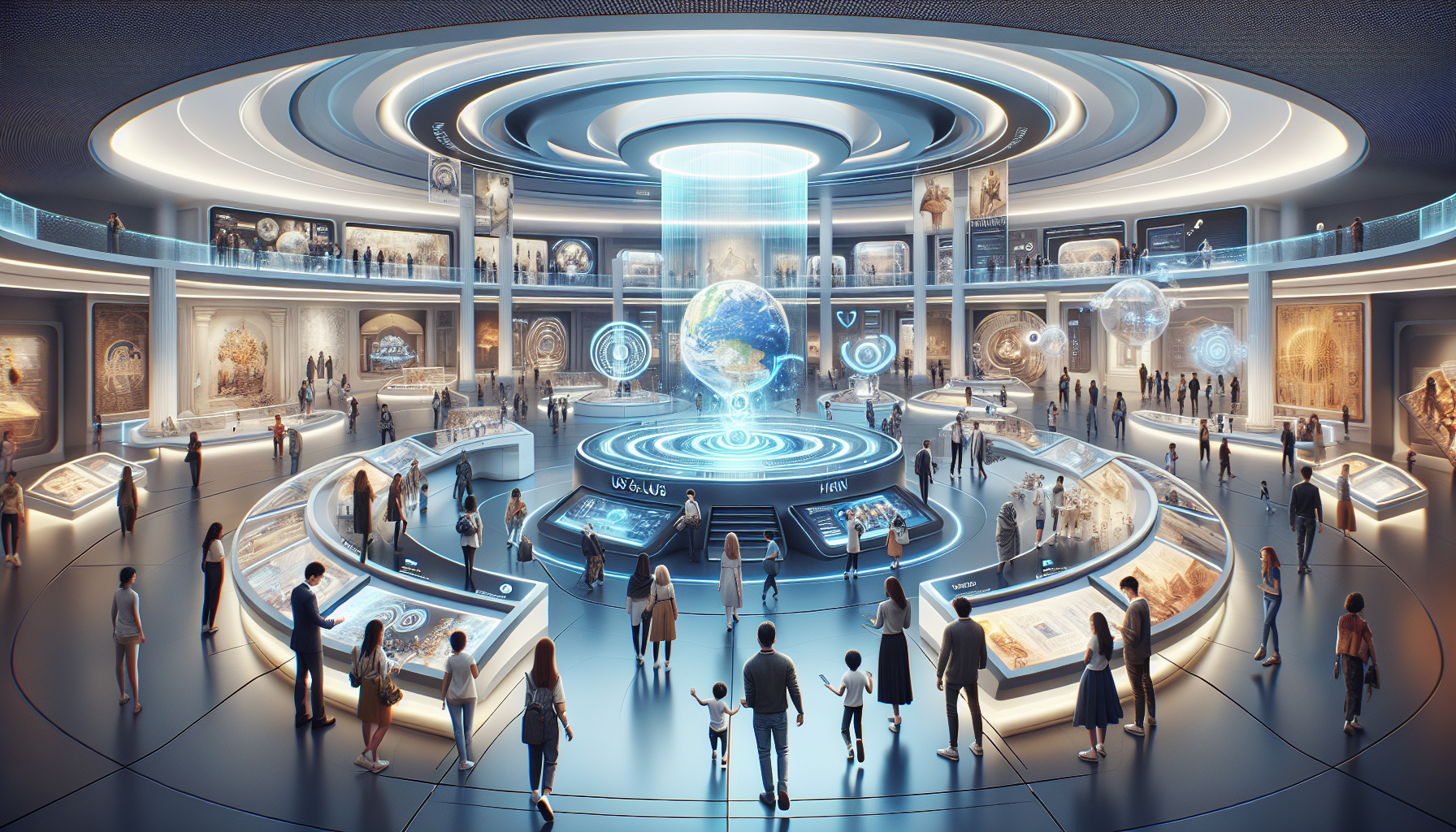
The Collector’s Crossroads: How Digital Transformation Is Reimagining the Future of Collections and Artifacts ~
The Collector’s Crossroads: How Digital Transformation Is Reimagining the Future of Collections and Artifacts
In a world where the physical and digital increasingly intertwine, collectors of all varieties find themselves at a fascinating intersection of tradition and innovation. This article takes you on a journey through the evolving landscape of collecting, where NFTs rub virtual shoulders with centuries-old artifacts, and where the very concept of ownership is being redefined before our eyes. You’ll discover: how technological advancements are not just changing what we collect, but fundamentally transforming how we perceive value, authenticity, and preservation. The traditional boundaries between physical and digital collecting are blurring—and as we’ll see, this convergence offers both unprecedented opportunities and complex challenges that will reshape our cultural heritage for generations to come.
Throughout our exploration, we’ll uncover: why some collectors are abandoning physical possessions for digital alternatives, while others are finding innovative ways to bridge both worlds. We’ll examine how emerging technologies like blockchain are simultaneously solving age-old problems of provenance while creating entirely new questions about sustainability and longevity. As the collector’s market undergoes this seismic shift, understanding these changes isn’t just academic—it’s essential for collectors, institutions, and casual observers alike.
So whether you’re a seasoned collector anxious about the future of your carefully curated physical treasures, a digital native excited about tokenized ownership, or simply curious about how humans assign value in a rapidly changing world—join me as we navigate the collector’s crossroads and glimpse the future of our shared cultural artifacts.
The Digital Renaissance: Transforming the Collector’s Landscape
The collection world stands at a precipice of transformation, one that might have seemed implausible just a few decades ago. Physical collections—those tangible assemblages of coins, stamps, artworks, or memorabilia that have defined the collector’s experience for centuries—are now sharing the spotlight with their digital counterparts. This shift represents more than a simple technological upgrade; it’s a fundamental reimagining of what it means to collect.
“NFTs have created a new market where none existed before,” notes art market economist Clare McAndrew in her 2022 Art Market Report. “They’ve enabled digital artists to monetize work that previously had no viable commercial model.” This observation captures just one facet of a multidimensional change reshaping how we perceive value and ownership.
The appeal of digital collecting extends beyond novelty. Digital collectibles offer practical advantages that their physical counterparts cannot match: they don’t degrade, require physical storage space, or necessitate insurance against damage or theft. They can be displayed virtually anywhere in the world, simultaneously, without the constraints of physical transportation or security concerns. For younger collectors especially, these benefits align perfectly with increasingly nomadic, space-constrained lifestyles and digital-first mindsets.
Yet this transition isn’t simply about convenience. Digital collections are creating entirely new categories of collectibles, from purely virtual artworks to hybrid physical-digital offerings that challenge our traditional understanding of what constitutes an “object.” As collector behaviors adapt to these new possibilities, we’re witnessing not just a technological evolution but a cultural one—with implications that extend far beyond the collecting community.
The Psychological Dimensions of Digital Collecting
The human impulse to collect runs deep—archaeologists have discover:ed collections of unusual pebbles in Neanderthal dwellings dating back thousands of years. But what happens to this ancient drive when the objects of our desire become intangible? The psychology of digital collecting reveals fascinating continuities and disruptions with traditional collecting behaviors.
Professor Russell Belk, a marketing researcher who has studied collecting for decades, observed that “possessions are a major contributor to and reflection of our identities.” This insight has proven remarkably durable even as collections migrate to digital formats. The underlying motivations—identity formation, social signaling, the thrill of the hunt, and the satisfaction of curation—remain largely unchanged. Digital collectors still experience the dopamine rush of acquisition and the pride of ownership; they still form communities around shared interests and expertise.
Yet important differences emerge in how these psychological needs manifest. Digital collections often emphasize public display and social interaction more prominently than physical collections, which might spend most of their existence in private cabinets or storage. The social media-friendly nature of digital collecting transforms what was often a solitary pursuit into a performance of taste and discernment.
This performance aspect introduces new psychological dimensions to collecting. Status signaling becomes more immediate and widespread, creating both opportunities for community-building and risks of superficial engagement. Some critics argue that digital collecting prioritizes acquisition over appreciation, with collectors focusing more on owning rare digital assets than developing genuine connections with their collections.
At the same time, digital collecting can democratize access to previously exclusive collecting domains. As art historian Amy Whitaker notes, “Blockchain technology offers the potential to grant ownership rights to a much broader segment of the population than traditional art market structures.” This democratization may satisfy deeper psychological needs for belonging and participation that traditional collecting markets, with their high barriers to entry, often failed to address.
The Authentication Paradox: Trust in a Trustless Environment
One of the most intriguing aspects of digital collecting is how it simultaneously resolves and complicates questions of authenticity and provenance—concerns that have plagued traditional collectors for centuries. Blockchain technology, which underpins many digital collectibles, offers unprecedented transparency regarding an item’s origin and ownership history. Every transaction is recorded immutably on a distributed ledger, theoretically eliminating disputes about authenticity or ownership that have long been the bane of physical collecting.
“Blockchain creates a permanent, unalterable record of provenance that could revolutionize how we establish the authenticity of collectibles,” explains technology researcher Primavera De Filippi in her analysis of blockchain applications. This capability addresses an age-old problem in collecting circles, where forgeries and misattributions have sometimes gone undetected for generations.
Yet this solution introduces its own paradoxes. The same technology that promises perfect provenance tracking also enables perfect digital reproduction. When every digital file can be copied with no loss of quality, what makes a particular digital asset valuable becomes increasingly abstract. The answer lies not in the file itself but in the socially recognized ownership rights attached to it—a concept that remains counterintuitive to many traditional collectors.
Furthermore, while blockchain may provide reliable tracking of an NFT’s history, it doesn’t necessarily guarantee the quality, significance, or cultural value of the underlying asset. The disconnect between technical authenticity and cultural authenticity creates tensions that the market is still working to resolve. As art critic Blake Gopnik provocatively asked, “When a digital file can be infinitely reproduced without degradation, what exactly are collectors buying if not social status?”
This authentication paradox reflects broader transformations in how we understand value in the digital age. Physical scarcity, long the cornerstone of collectible valuation, gives way to artificially created scarcity and consensus-based value determination. How these new value systems will evolve—and whether they’ll ultimately prove as durable as their physical predecessors—remains one of the most fascinating open questions in the collecting world.
Bridging Worlds: The Rise of Phygital Collecting
Rather than seeing physical and digital collecting as opposing forces, forward-thinking collectors and companies are increasingly exploring their integration—creating what some have dubbed “phygital” collecting. These hybrid approaches leverage the strengths of both realms, offering tangible objects with digital enhancements or digital assets with physical counterparts.
Luxury brands have been early adopters of this approach. Fashion house Gucci, for instance, released a pair of digital-only sneakers in 2021 that could be “worn” in certain virtual environments, while simultaneously producing limited physical versions for traditional collectors. “We’re seeing the boundaries between physical and digital ownership becoming increasingly porous,” notes fashion technologist Amanda Parkes. “The most innovative brands aren’t choosing between worlds—they’re creating experiences that span both.”
This convergence extends beyond luxury goods. Trading card companies now produce physical cards with QR codes linking to exclusive digital content or NFT versions of the same card. Some vinyl record releases come with downloadable digital tracks that include additional content unavailable in the physical format. Museums are experimenting with augmented reality exhibits that allow visitors to “collect” digital versions of physical artifacts they encounter.
These hybrid approaches address practical concerns for collectors. Physical objects provide tangible pleasure and connection but are vulnerable to damage and decay; digital assets offer permanence and perfect reproduction but lack the sensory richness of physical objects. By combining both, collectors can hedge their bets while enjoying the unique benefits of each medium.
The phygital trend also reflects a broader cultural shift toward experiences that seamlessly blend physical and digital interactions. As digital strategist Jessica Groopman observes, “The most engaging consumer experiences now happen at the intersection of physical and digital touchpoints, creating something greater than either could achieve alone.” For collectors, this intersection creates new opportunities to deepen their connection with their collections, adding layers of interaction and meaning impossible in either realm alone.
Institutional Adaptation: Museums and Marketplaces in Transition
Traditional cultural institutions and marketplaces find themselves navigating unfamiliar territory as collecting practices evolve. Museums and galleries, long the arbiters of cultural value and preservation, must now consider how to collect, display, and preserve digital assets alongside their physical collections. Meanwhile, auction houses and specialized marketplaces are racing to develop expertise in digital asset valuation and transaction facilitation.
The British Museum made headlines when it partnered with blockchain company The LaCollection to create NFTs based on digital images of works by Japanese artist Katsushika Hokusai. The museum’s director, Hartwig Fischer, explained the decision as part of a broader strategy “to engage new audiences and inspire the next generation of museum visitors.” This initiative represents just one approach as institutions experiment with various models for participating in digital collecting ecosystems.
These adaptations raise profound questions about institutional purpose and practice. How should museums preserve digital artworks that may depend on specific software environments or online platforms? What responsibility do institutions have to collect digital ephemera that reflect contemporary culture? How should they address the environmental concerns raised by energy-intensive blockchain technologies?
For commercial marketplaces, different challenges emerge. Traditional auction houses like Christie’s and Sotheby’s have enthusiastically embraced NFT sales, but struggle with technical expertise gaps and questions about long-term value stability. Meanwhile, native digital marketplaces like OpenSea must build trust and credibility with collectors accustomed to established market structures and expert curation.
“Institutional adaptation isn’t optional—it’s existential,” argues museum technology specialist Seb Chan. “Cultural institutions that fail to engage meaningfully with digital collecting risk becoming increasingly irrelevant to younger generations for whom the digital/physical distinction is already meaningless.” This observation highlights the stakes for traditional institutions, which must evolve while maintaining their core missions of preservation and education.
The Sustainability Question: Environmental and Cultural Concerns
As digital collecting gains momentum, critical questions about its sustainability—both environmental and cultural—demand attention. The environmental impact of NFTs and other blockchain-based collectibles has become a flashpoint for criticism, with early implementations consuming enormous amounts of energy for transaction verification. While newer systems have dramatically reduced this footprint, the issue remains a significant concern for environmentally conscious collectors.
“The carbon footprint of a single NFT transaction on certain blockchains can exceed that of a conventional art shipment by orders of magnitude,” notes environmental researcher Joanie Lemercier, whose analysis of NFT environmental impacts has influenced industry practices. This reality has prompted the development of more efficient consensus mechanisms and carbon-offset programs by marketplaces seeking to address these legitimate concerns.
Beyond environmental considerations, cultural sustainability questions loom large. When collectibles exist primarily as digital assets, their preservation depends on the continued existence of specific platforms, technologies, and file formats. The history of digital media is littered with once-popular formats that became obsolete within decades—from floppy disks to Flash animations. How will today’s digital collections fare over similar timeframes?
Some collectors and institutions are addressing these concerns through decentralized storage solutions and format-independent preservation strategies. “Cultural permanence requires redundancy and format independence,” explains digital preservation specialist David Rosenthal. “The most valuable digital collections will be those designed with long-term accessibility as a primary consideration, not an afterthought.”
These sustainability questions reflect broader tensions between innovation and preservation in collecting practices. The most promising approaches acknowledge these tensions while developing strategies that balance excitement about new possibilities with responsibility toward future generations of collectors and cultural observers.
The Future Collector: New Horizons and Persistent Values
As we look toward the future of collecting, certain trajectories seem clear while others remain tantalizingly unpredictable. The integration of augmented and virtual reality technologies promises to create immersive experiences for digital collections, potentially addressing criticisms about their intangibility. Meanwhile, advancements in digital scarcity mechanisms and ownership verification will likely continue to evolve, addressing current limitations.
“The next generation of digital collecting will focus less on simple ownership and more on participation and co-creation,” predicts digital culture researcher Nancy Proctor. This prediction aligns with emerging trends toward interactive digital collections and creator-community collaborations that redefine traditional collector-collectible relationships.
Despite these technological shifts, the fundamental human motivations that drive collecting behavior show remarkable persistence. Whether collecting ancient coins or procedurally generated avatar accessories, collectors continue to seek meaning, connection, status, and pleasure through their collections. These enduring motivations suggest that while the methods and objects of collecting will transform, the underlying drive will remain recognizably human.
The most successful collectors of the future will likely be those who balance openness to innovation with appreciation for the lessons of collecting history. They’ll develop fluency across physical and digital realms, recognizing the unique value propositions of each while creatively integrating elements of both. They’ll prioritize meaningful connection with their collections over accumulation for its own sake, and they’ll participate in communities that share knowledge and appreciation across traditional boundaries.
Conclusion: Navigating the Collector’s Crossroads
As we stand at this collector’s crossroads, one thing becomes abundantly clear: we are witnessing not the replacement of one collecting paradigm with another, but rather an expansion of possibilities that enriches the collector’s experience. Physical and digital collecting will continue to influence and transform each other, creating new hybrid forms that we can only begin to imagine.
For collectors navigating this changing landscape, adaptability and curiosity will prove more valuable than rigid adherence to either traditional or cutting-edge approaches. The collectors who thrive will be those who remain open to new possibilities while bringing critical thinking to their evaluation of emerging trends and technologies.
Cultural institutions and marketplaces face similar challenges, requiring thoughtful engagement with both innovation and tradition. Their success will depend on their ability to bridge worlds—to honor collecting’s rich history while embracing its digital future, to preserve cultural heritage while fostering new forms of creativity and exchange.
The transformation of collecting practices reflects broader changes in how we create, share, and value cultural artifacts in the digital age. By understanding these changes, we gain insight not just into collecting itself, but into evolving notions of ownership, authenticity, and cultural value that will shape our shared future. The collector’s crossroads isn’t simply a moment of transition—it’s a window into fundamental questions about how we relate to the objects, images, and ideas that define our cultural experience.
If you’ve enjoyed this article it would be a huge help if you would share it with a friend or two. Alternatively you can support works like this by buying me a Coffee