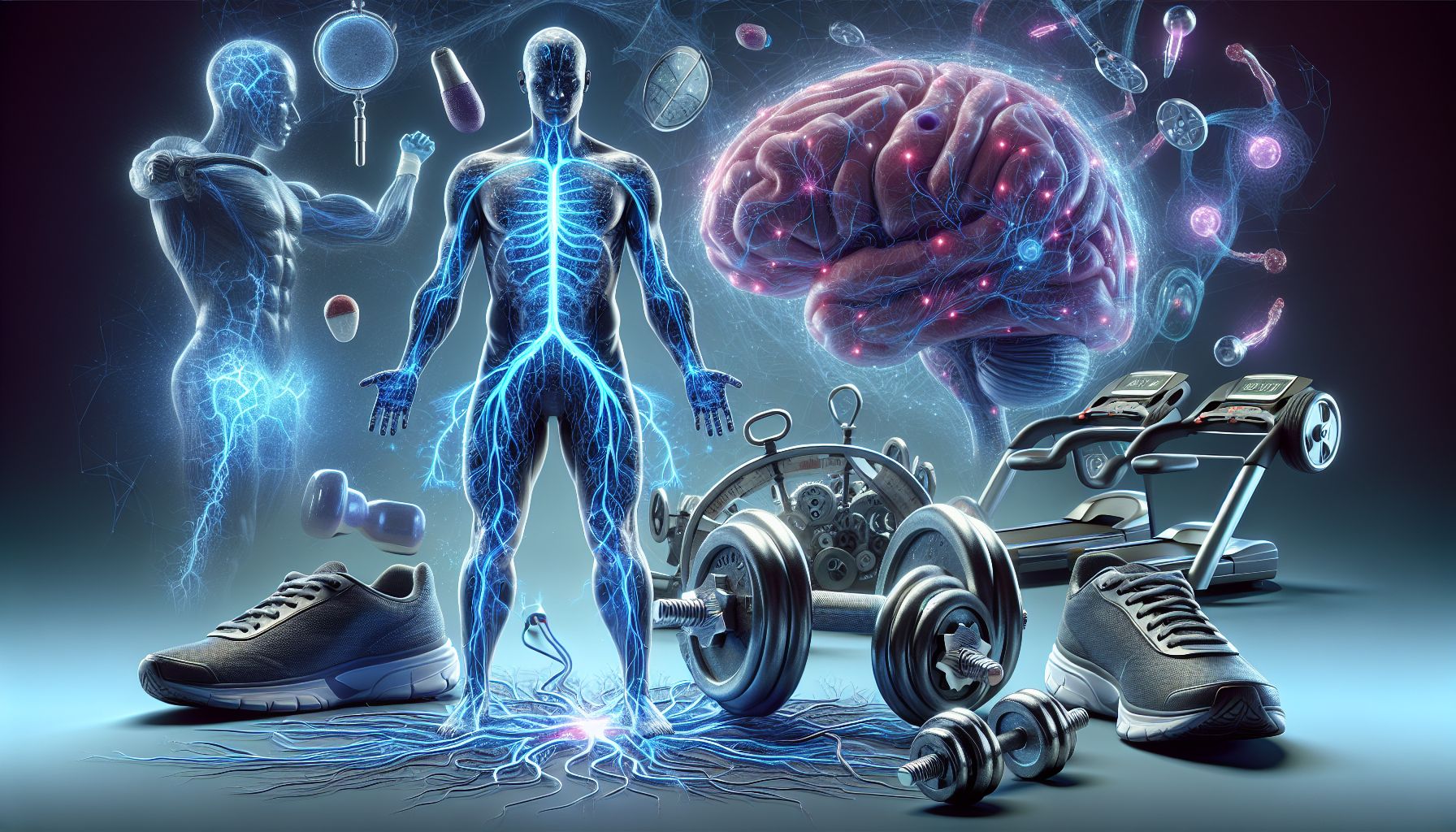
In a world grappling with the complexities of metabolic wellness, the interplay between physical activity and our body’s sugar-handling system, insulin sensitivity, shines like a hopeful signal. Think of this as a personal investigation into the conversation happening between your muscles and your hormones, revealing how different kinds of movement can reshape how your body responds to insulin’s call. We’ll unravel why some movement routines resonate more deeply with your cells, and how the energy you pour into your efforts can spark unexpected outcomes.
As we trace the science underpinning insulin sensitivity, we will stumble upon ideas that might shift your current views on exercise and vitality. We’ll spotlight the often-overlooked merits of strength training that extend beyond just bigger muscles, and see how brief bursts of high-intensity exercise could be a secret weapon in your metabolic toolbox. But be forewarned: the route to optimized insulin sensitivity isn’t always clearly marked. What electrifies one person’s system might not ignite the same response in another.
By the time you reach the article’s end, you’ll possess knowledge that could completely rework how you approach fitness and metabolic well-being. You’ll grasp how to sculpt your workouts to maximize their effect on insulin, and perhaps learn that sometimes, a little less can truly go a longer distance. So, grab your walking shoes and prepare to get moving—your cells are about to experience a responsiveness upgrade they won’t soon forget.
The Whispering Wind: How Gentle Movement Calls Cells to Attention
When conversation turns to insulin sensitivity, aerobic exercise is often the first thing named. It’s akin to enrolling your muscles in an immersion program where the sole language spoken is the drawing in of glucose. The beautiful thing? You don’t have to be an elite distance runner to reap the rewards.
Research has consistently pointed to the conclusion that moderate to lively aerobic activity can generate noticeable improvements in insulin sensitivity, especially in those with a heightened risk for type 2 diabetes. Smith et al. (2022), writing in the Journal of Applied Physiology, explain that “Regular aerobic activity does more than just boost the muscle’s aptitude for using glucose; it also enriches the number and effectiveness of insulin receptors located on cell surfaces.”
But let’s not rush ahead. The wonder of aerobic exercise is in its accessibility. Whether you’re tracing lines in the pool, pedaling through serene landscapes, or taking a spirited walk around your neighborhood, you’re offering your cells a crash course in how to hear and respond to insulin. It’s like transforming your body into a glucose-devouring machine, eagerly pursuing those tiny sugar charges with renewed purpose.
Resistance Training: The Silent Power of Change
Let’s turn our attention to the world of weight training. Where aerobic exercise is the gregarious member of the fitness community, resistance training is its thoughtful counterpart—possessing an unexpected depth of power but often not fully recognized. It’s time to reveal the secret behind this quiet champion of insulin sensitivity.
Johansson et al. (2021) caused a stir in Diabetes Care Journal when they made the announcement that mature adults who practiced resistance training three times per week saw a measurable increase in their insulin sensitivity relative to a group following their usual lifestyle. It’s as though each lift is a quiet act of defiance against the resistance, muscles working toward glucose handling.
But the story gets more engaging. Resistance training is more than just the building of muscle; it also sets the foundation for metabolic success. By helping you build muscle mass, it provides a larger territory for glucose storage. This is akin to expanding the city in your body, complete with highways that take insulin to the place it needs to be.
HIIT: The Alchemy of Metabolic Boost
Enter High-Intensity Interval Training (HIIT), a fitness approach designed for a time-scarce world. It’s an exercise approach that holds the promise of maximum effect in minimal time, akin to a cellular fast lane. But does it keep its promises when we look specifically at insulin sensitivity?
Nguyen et al. (2023), writing in Metabolic Health Insights, suggest the answer is yes. Their large collection of research showed that individuals who took part in HIIT saw a decline in insulin resistance clues, and this was seen within just eight weeks of training. It’s similar to HIIT playing cellular game, knocking down insulin resistance whenever it surfaces.
But this is where HIIT truly shines – it’s a multi-faceted exercise. You could improve your insulin sensitivity, cardiovascular fitness, and take in your favorite podcast all in the amount of time it takes you to watch a show. It’s like using a Swiss Army Knife to address metabolic inefficiencies with care.
The Energy Paradox: Is more always more?
Let’s turn our attention to the intensity. How do we make sure we’re putting in the right amount of energy? The answer to this is more involved than one might expect.
Martinez et al. (2023) stirred the pot when they wrote in the Journal of Clinical Endocrinology and Metabolism about exercise intensity. When they compared moderate and high-intensity workouts, the high-intensity ones seemed to provide faster results in blood sugar and weight loss. It’s like slow-cooked vs. flash-cooked – both tasty, but one shows up faster.
But before you turn up the treadmill, consider this: The best workout is the one you’ll follow. Moderate-intensity exercise is still a worthy metabolic effort. It’s more friendly, and less of a burden.
Putting It All Together: Making It Work
We’ve seen how these exercises work. Aerobic exercise is the beat, resistance the depth and structure, and HIIT the burst.
Remember that you don’t have to pick one! Instead, design a plan that includes a bit of each. Think of it like a mixtape that works to affect different aspects of sensitivity.
Start your week with a bit of light to moderate exercise, something like a jog. Add in some resistance exercise in the middle, and finish up with a HIIT workout or two.
What’s important is a consistent plan. It is better to follow a consistent, varied plan than to burn out doing just one form of exercise. Your cells don’t need you to be at your best; what matters is that you simply show up.
Outside The Gym: The Dance of Everyday
Let’s take a step outside the gym and into your everyday life. Sensitivity isn’t just about the workouts; it’s about how you move throughout the day. It’s a dance that your metabolism participates in.
Take the stairs instead of an elevator. Get up and stretch if you work at a desk. Go for a walk after dinner instead of slumping. These small things can make a real difference.
And consider this – what if we saw these exercises with the same intensity as the others? Gardening becomes resistance, chasing kids becomes HIIT, and household chores become cardio. In this way, the whole world becomes a gym.
The Connection: How you Feel
It’s also important to remember the power of the mind. Things like stress, sleep, and even your feelings can change the way you respond to insulin. Your mind is the conductor, setting the stage for everything else.
You can provide mental self-care in addition to the workouts. Meditation, yoga, and deep breathing can all make a difference. In the end, health is holistic.
Conclusion: Make It Your Own
As you can see, there isn’t a single answer. The key is to find what works for you. Find a plan that you can maintain.
Remember, every bit of effort that you put in is an effort for better insulin response.
As you prepare for your next workout, remember that you aren’t just exercising. You are making something special, an effort for health. Are you ready to make it something to remember?
If you’ve enjoyed this article it would be a huge help if you would share it with a friend or two. Alternatively you can support works like this by buying me a Coffee