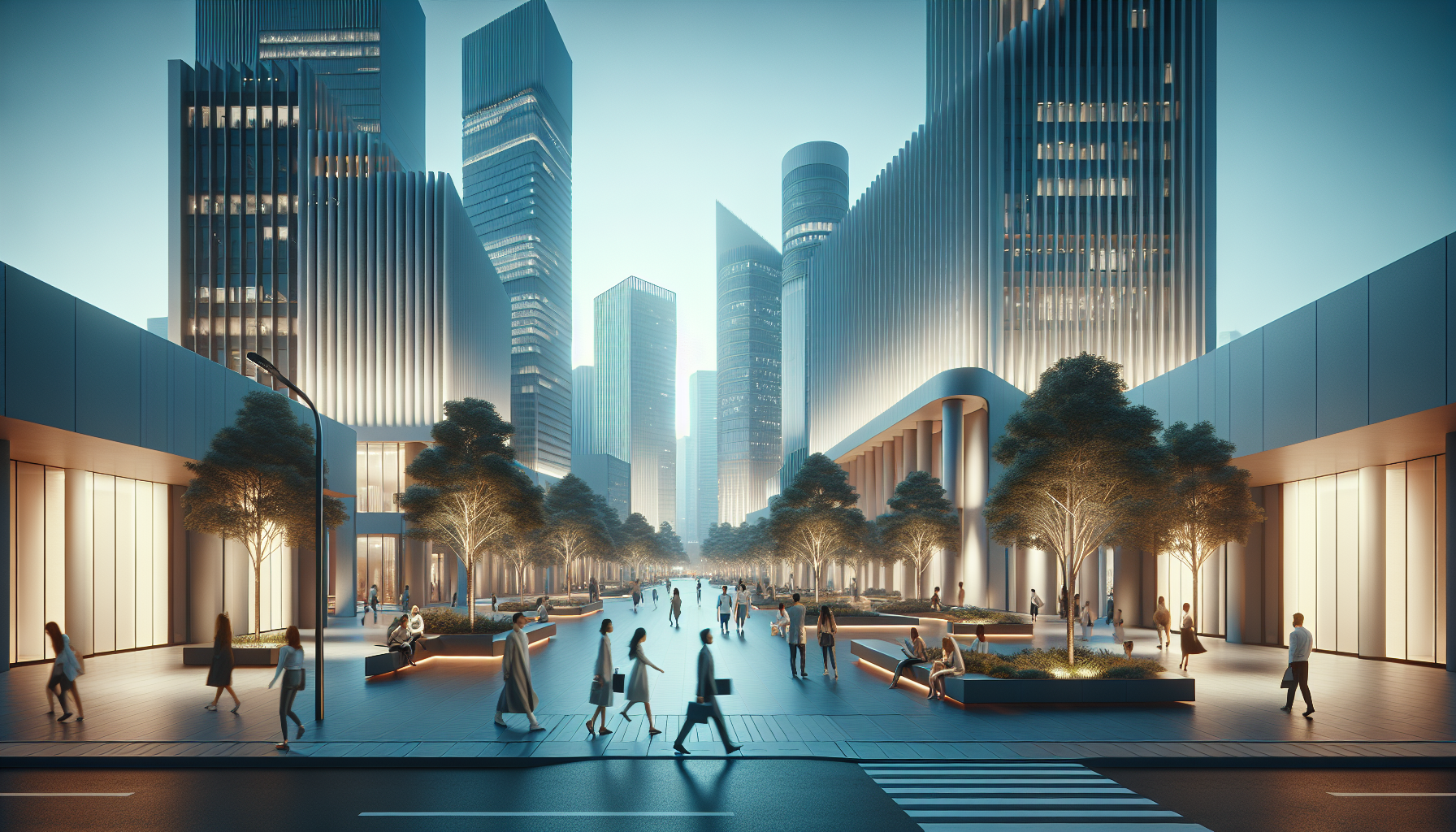
In a world bursting with complicated things, thinking about keeping it simple in city planning might sound a bit strange. But actually, it could be the secret to making our cities better places to live, that are good for the environment, and full of life. This story will make you think differently about how cities grow and show you how keeping things simple can make a big difference.
By looking closely at how simplicity can help plan cities, you’ll understand how cities are changing to focus on what people need and to protect nature. We’ll check out cool examples like Barcelona’s superblocks and tiny apartments in Hong Kong, which prove that sometimes, less is more. As we explore these ideas, you’ll see how nature is being added to cities, mixing buildings and nature together nicely.
But this isn’t just about how cities are planned – it’s about how we think about cities and questioning old ideas about how they should work. As you read, think about how these simple ideas could help your own town and your everyday life. Ready to see your city in a new way? Let’s go on this city adventure together, where keeping it simple is super important for the future of our cities.
The Peaceful Side of City Planning: Keeping It Simple
Imagine a city where loud traffic turns into the happy sounds of people talking, where boring concrete turns into green gardens, and where going to work becomes a nice walk. This isn’t just a dream; it’s what many cities are trying to do by keeping things simple in how they plan.
Basically, keeping it simple in city planning means getting rid of things that make our cities feel cluttered and confusing, both the real stuff and the ideas behind it. It’s like cleaning out your room – keeping only the things you love and use, and getting rid of the rest. As Jan Gehl said in his famous book “Cities for People,” this is all about “easy to get to places, good connections, and green spaces” (Gehl, 2010).
But don’t think simple means boring. Actually, it often leads to the coolest and most creative ideas. For example, there’s a place in Copenhagen called Amager Bakke. At first, it looks like just a power plant, which isn’t usually known for being simple. But if you look closer, you’ll see a ski slope and a park built right into it. It’s a great example of doing two things at once, or in this case, skiing down a power plant.
This kind of thinking makes us wonder about what city buildings should really be like. Why can’t a power plant also be a place to have fun? Why should cars take up all the space on our streets when they could be places for people to hang out? These are the questions that keeping it simple in city planning wants to ask – and answer.
Barcelona’s Superblocks: An Easy Fix for Big Problems
Speaking of wondering about old ideas, let’s wander through Barcelona’s superblocks. These cool city inventions are like puzzles for city planners – easy to understand, but they change everything.
Superblocks are groups of blocks in a city where cars aren’t allowed to drive through the streets inside. It’s like the city saying, “Cars, you can look, but you can’t come in.” The result? Streets that used to be full of traffic are now lively places for people to enjoy.
But here’s the really interesting part. You might think that stopping cars would cause traffic jams somewhere else, like squeezing a balloon in one spot and making it bigger in another. But surprisingly, that’s not what happened. As Mueller et al. (2020) reported, people have actually noticed that the air is cleaner and they feel healthier since the superblocks were built.
It’s a perfect example of how keeping things simple can lead to surprisingly good results. By making traffic easier, Barcelona has created a chain reaction of good things – less pollution, more exercise, stronger communities. It’s like the city version of eating your veggies – it seems simple, but it makes you super healthy in many ways.
Thinking Small: The Popularity of Tiny Apartments
Now, let’s zoom in from city blocks to individual homes. Tiny apartments are the tiny houses of the city, and they’re making us rethink how much space we really need to live comfortably.
In places like Hong Kong, where space is super expensive, tiny apartments are usually only about 200 to 300 square feet (Li, 2021). That’s about the size of a big closet in some houses. But before you start feeling cramped, remember this: these small homes often come with shared kitchens and living rooms.
It’s like the city saying, “Why have your own dining room that you barely use when you could share a fancy kitchen with your neighbors?” It’s the city planning version of sharing – why own something when you can just use it when you need it?
This way of designing homes is simplicity at its best. It gets rid of the unnecessary stuff and focuses on what’s really important. But it also makes us think about our ideas about privacy and personal space. By doing that, it opens up new possibilities for building communities and saving resources.
The popularity of tiny apartments isn’t just about saving space – it’s about changing how we live in cities. It’s a change from thinking of our homes as separate boxes to seeing them as part of a bigger, connected city.
Nature’s Easy Way in the City
Now, let’s step out of our tiny apartments and breathe in some fresh air. Or at least, what we call fresh air in cities. City planners are starting to realize that keeping it simple doesn’t just mean having less stuff – it also means going back to nature.
Adding nature to cities is like giving them a breath of fresh air – literally. It’s about making spaces that do many things at once: help the environment, provide places to play, and look beautiful. Singapore’s Gardens by the Bay is a great example of this.
As Tan and Jim (2017) pointed out, city forests, gardens on walls, and green roofs are becoming more and more common in city planning. These aren’t just pretty decorations – they work hard and do many jobs. They help cool down the city, clean the air, give homes to animals, and give city people a much-needed connection to nature.
But here’s the really cool part: these green spaces are often easier to take care of than regular city stuff. Nature, if you let it do its thing, can grow easily with very little help. It’s like cities are finally learning to work with nature, instead of fighting against it.
This way of planning cities is like acupuncture for cities – by putting small bits of nature throughout the city, we can make the whole system healthier. It’s a simple idea with big effects on how we design and live in our cities.
The Funny Thing About Simplicity: When Less Is Actually More
As we’ve traveled through the world of keeping it simple in city planning, you might have noticed something that keeps happening: often, the easiest solutions lead to the biggest and most helpful results. It’s a funny thing that makes us rethink our usual idea that ‘more is better.’
Take Barcelona’s superblocks, for example. The simple act of stopping cars in certain areas has led to lots of good things – cleaner air, more exercise, stronger communities. It’s like by taking away one thing (too much traffic), the city has made space for a whole bunch of good changes to grow.
Also, tiny apartments might seem like a compromise, something we have to do in crowded cities. But by making our homes smaller, we create new chances for shared resources and community activities. It’s like adding by subtracting – by having less private space, we can gain lots of shared experiences and resources.
And when it comes to adding nature to cities, the benefits are huge. A single tree can clean the air, provide shade, lower stress, raise property values, and create homes for city animals. It’s a simple solution with many, many good results.
This funny thing about simplicity makes us rethink how we solve problems, not just in city planning, but in everything we do. It makes us wonder: could the answer to our biggest problems be the easiest things we can do?
Conclusion: A Simple Thing You Can Do
As we finish our trip through the world of keeping it simple in city planning, it’s clear that this idea is actually pretty smart. It’s a detailed and thoughtful way of thinking that makes us question our assumptions and opens up new possibilities for living in cities.
The ideas we’ve looked at – from superblocks to tiny apartments to city forests – aren’t just fancy thoughts. They’re real solutions that are being used in cities around the world, often with amazing results. They show us that we can create cities that are more livable, better for the environment, and more focused on people, often by doing less instead of more.
But here’s the thing: these changes don’t just happen by themselves. They need us to change our minds, not just city planners and leaders, but all of us who live in and love our cities. So here’s a simple thing you can do: look at your city in a new way. Where could a little simplicity help a lot? Could your street be better with less traffic and more space for people? Could your neighborhood use some more green?
Remember, as Jan Gehl wisely said, we shape our cities, and then our cities shape us. By keeping it simple in city planning, we’re not just changing our cities – we’re changing our lives and our future. And that, surprisingly, is not a simple thing at all.
References
Gehl, J. (2010). Cities for People. Island Press.
Li, B. (2021). Micro-Apartments in Hong Kong: A Study of Spatial Strategies. Journal of Urban Design, 26(2), 269-287.
Mueller, N., Rojas-Rueda, D., Khreis, H., Cirach, M., Schepers, J., & Dons, E. (2020). Health impacts related to urban traffic-related air pollution and noise exposure: A health impact assessment study of the superblock model in Barcelona, Spain. Environment International, 134, 105281.
Tan, P. Y., & Jim, C. Y. (2017). Greening for liveable cities. Springer.
If you’ve enjoyed this article it would be a huge help if you would share it with a friend or two. Alternatively you can support works like this by buying me a Coffee