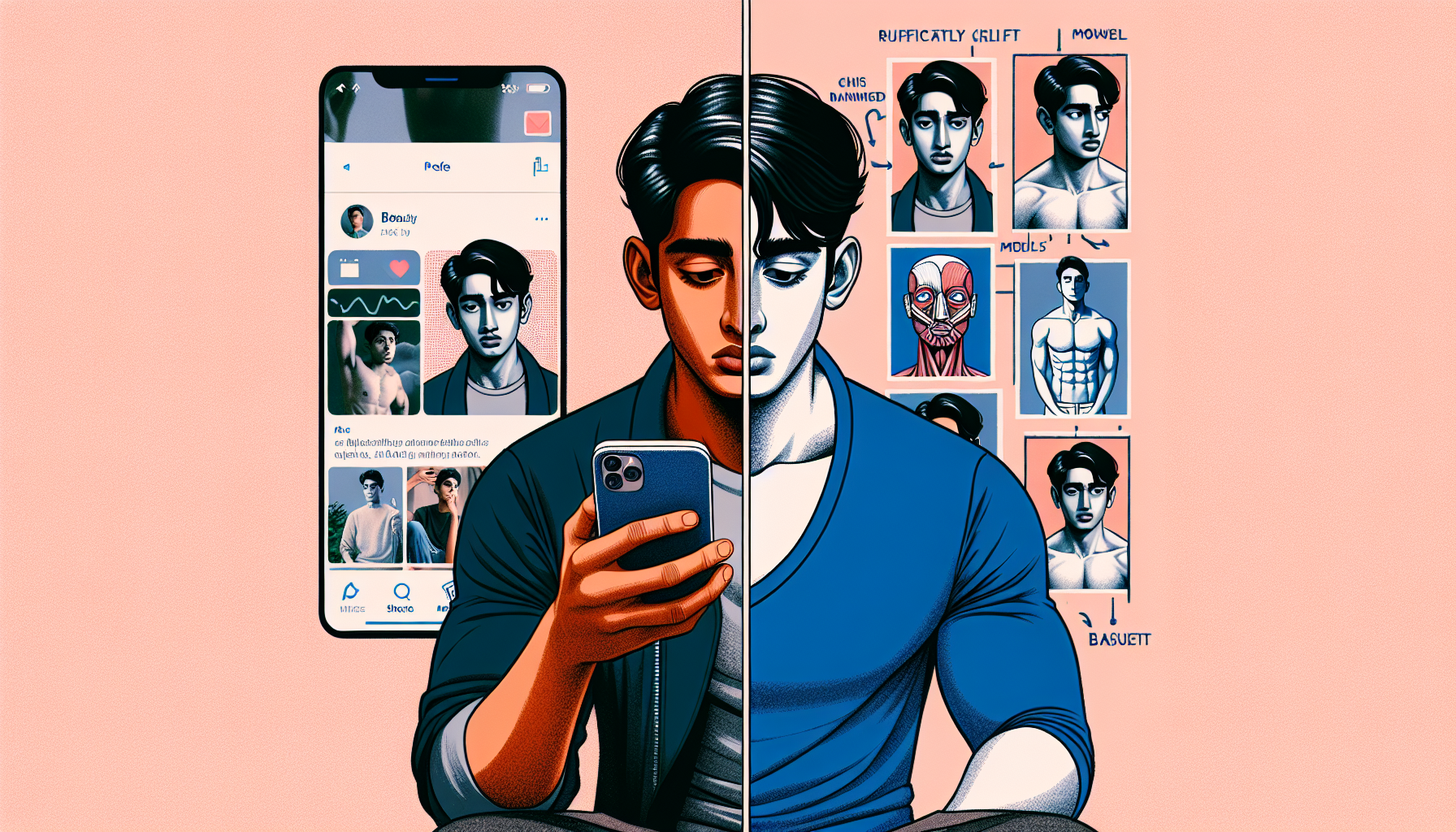
Beyond the Perfect Picture: Unpacking the Real Impact of Social Media on Teen Self-Image
The Looking Glass in Your Pocket
In this exploration of social media’s complex relationship with teenage self-perception, you’ll discover: how digital platforms have fundamentally altered the way young people see themselves and others. We’ll unmask the algorithms that silently shape beauty standards and reveal surprising insights about how different platforms affect various aspects of self-image. You’ll gain practical strategies for fostering healthier digital habits, both for yourself and the teens in your life.
The journey ahead might challenge what you believe about social media’s influence. While we’ll certainly examine the concerning correlations between platforms like Instagram and body dissatisfaction, we’ll also uncover: unexpected findings that defy simplistic “social media is bad” narratives. Some platforms might actually be boosting certain aspects of teen identity development in ways researchers are just beginning to understand.
By the article’s end, you’ll possess a nuanced understanding of how teens navigate their digital world, equipped with evidence-based approaches to transform potentially harmful online experiences into opportunities for growth. Let’s dive beneath the surface of filtered perfection to discover: what’s really happening when teens scroll through their feeds.
The Digital Self-Image Revolution
Remember life before selfies? Before filters could erase imperfections with a swipe? For today’s teenagers, that world never existed. They’ve inherited a reality where self-image isn’t just reflected in bathroom mirrors but constructed meticulously through screens, where approval comes in quantifiable metrics of likes and comments.
The statistics paint a sobering picture. A comprehensive study published in Body Image revealed that 90% of teenage girls report using some form of photo editing before posting images online (Cohen et al., 2019). This isn’t merely vanity at work—it’s a response to an environment where appearance has become a form of social currency.
“Social media has created an entirely new dimension of adolescent development,” explains Dr. Sarah Coyne from the Journal of Adolescent Health. “Teens are not only managing their identities in person but also curating digital versions of themselves, often with significant psychological consequences” (Coyne, 2020).
What makes this digital revolution particularly potent is its constant presence. Unlike magazines or television—which previous generations blamed for unrealistic beauty standards—social media travels in teenagers’ pockets, offering endless opportunities for comparison. The average American teenager now spends approximately 7.5 hours daily consuming digital media, with social platforms accounting for much of this time (Twenge & Martin, 2020).
But here’s where our story takes an unexpected turn: not all platforms affect teens the same way, and not all teens respond identically to social media exposure. The relationship between digital life and self-image operates through mechanisms far more complex than most headlines suggest.
Platform-Specific Effects: Not All Social Media Is Created Equal
The common narrative that “social media harms teen self-image” overlooks a crucial nuance: different platforms create distinctly different psychological environments. Think of it as the difference between visiting various neighborhoods in a city—each with its own culture, expectations, and impact on visitors.
Instagram, with its highly visual nature, consistently emerges as particularly problematic for body image concerns. Research published in the International Journal of Eating Disorders found that just 30 minutes of Instagram browsing significantly increased body dissatisfaction among teenage girls (Fardouly et al., 2018). The platform’s emphasis on carefully curated, often edited images creates what researchers call a “highlight reel” effect, where teens compare their complete lives to others’ most polished moments.
In contrast, YouTube shows a more complicated relationship with self-perception. “While visual platforms focused on appearance tend to increase body dissatisfaction, platforms that emphasize skills, interests, and community can actually boost certain aspects of identity development,” notes Dr. Linda Charmaraman in her research for the Journal of Adolescent Research (Charmaraman, 2021).
TikTok presents perhaps the most fascinating case study. Its algorithm-driven content delivery means teens encounter a wide variety of body types and presentations—sometimes more diverse than what they’d see in their immediate social circles. Yet its rapid-fire delivery of content means harmful messages can be absorbed almost subconsciously.
“The uniqueness of TikTok lies in how quickly it delivers both harmful and helpful messages about body image,” explains social media researcher Dr. Jasmine Wang. “A teen might see a harmful weight-loss challenge followed immediately by a body-positive affirmation, creating a cognitive whiplash effect we don’t fully understand yet” (Wang, 2022).
This platform variability helps explain seemingly contradictory research findings about social media’s impact. When studies fail to distinguish between platforms or account for how teens use them, they miss critical differences in psychological influence.
The Comparison Trap: How Social Media Warps Self-Perception
Social comparison isn’t new to human psychology—we’ve been measuring ourselves against others since time immemorial. What’s revolutionized this ancient process is social media’s ability to present endless, algorithmically selected comparison targets, often enhanced through filters, editing, and careful curation.
The mechanism works like this: Teens scroll through carefully constructed representations of peers and celebrities, comparing these highlight reels to their own unfiltered reality. This comparison activates what psychologists call “upward social comparison”—measuring oneself against those perceived as superior in some valued attribute.
“What makes social media particularly potent is that these comparisons happen rapidly, repeatedly, and often unconsciously,” explains media psychologist Dr. Richard Morris. “The brain processes hundreds of comparative judgments during a typical scrolling session, without the cognitive resources to contextualize these images as unrealistic” (Morris, 2021).
For teenage girls especially, this creates a feedback loop with significant consequences. Research published in Psychological Science found that girls who engaged in more frequent social comparison on social media showed higher rates of depressive symptoms six months later, even after controlling for initial mental health status (Nesi & Prinstein, 2019).
But here’s the counterintuitive finding: when researchers taught teens about the constructed nature of social media content, their vulnerability to negative comparisons decreased significantly. In one intervention study, teenagers who received education about photo editing techniques and the selective presentation of content on social media showed a 30% reduction in appearance-related comparisons (McLean et al., 2020).
This suggests the problem isn’t simply exposure to social media but rather how teens process and contextualize what they see—a cognitive framing that adults can help shape.
Gender Differences: Not Just a Girls’ Issue
The narrative around social media and self-image often centers on teenage girls, but emerging research reveals that boys face their own distinct challenges in digital spaces—they’re just less likely to talk about them.
While girls typically report higher rates of appearance-related concerns linked to social media use, boys show increasing rates of muscularity-oriented body dissatisfaction. A study in Psychology of Men and Masculinity found that exposure to fitness-focused social media content predicted increased muscle dissatisfaction and supplement use among teenage boys (Holland & Tiggemann, 2020).
“Boys are bombarded with images of lean, muscular physiques that, similar to the thin ideal for girls, represent body types that are difficult or impossible for most to achieve naturally,” explains researcher Dr. Stuart Murray in the Journal of Youth and Adolescence. “The difference is that boys have been socialized not to discuss these concerns openly” (Murray, 2020).
This silence creates particular risks. Boys experiencing body image distress report using more concerning coping mechanisms, including unregulated supplement use and excessive exercise, with less likelihood of seeking support or discussing these issues with peers or adults.
The solutions must be equally gender-informed. When intervention programs address the specific ways social media affects boys’ body image—focusing on performance and muscularity rather than just weight and appearance—effectiveness rates improve dramatically. One program that specifically addressed muscle-building content and supplement marketing on platforms popular with teenage boys showed twice the positive impact of general media literacy programs (Yager & O’Dea, 2018).
As we continue exploring social media’s impact, we’ll discover: how algorithms add another layer of complexity to this issue, potentially amplifying harmful content without teens or their parents even realizing it.
The Algorithm Factor: Invisible Influences on Teen Self-Image
Behind every social media experience lurks something most teens never directly perceive: the algorithm. These complex computational systems determine which content appears in feeds, what gets recommended, and ultimately, which beauty standards receive amplification.
What makes algorithms particularly powerful is their personalization. If a teen lingers on content related to weight loss, physical appearance, or beauty products, the algorithm interprets this as interest and serves more similar content—creating what researchers call “filter bubbles” or “rabbit holes.”
“The algorithmic amplification of appearance-focused content creates artificial environments where certain body types and beauty standards appear far more common than they actually are,” explains tech ethicist Dr. Karina Vold in Technology, Mind and Behavior. “This normalizes extreme standards that would seem obviously unrealistic if encountered in isolation” (Vold, 2021).
A Stanford University study demonstrated this effect by creating fresh social media accounts and measuring how quickly algorithms delivered appearance-focused content. Accounts that showed even brief engagement with fitness or beauty content received feeds where such content constituted up to 70% of recommended posts within just three days (Shaw & Pennington, 2022).
The implications of algorithmic curation extend beyond simple exposure. These systems create custom-tailored environments that can reinforce existing insecurities or create new ones. For teenagers already concerned about specific aspects of their appearance, algorithms can transform occasional worries into constant preoccupations by surrounding them with “solutions” to problems they didn’t know they had.
Parental controls and content restrictions offer partial solutions, but true algorithmic literacy—understanding how these systems work and influence what we see—represents a crucial new dimension of media education.
Beyond Harm: Social Media as a Potential Positive Force
This narrative takes an unexpected turn when we examine emerging research on social media as a potential positive influence on self-image. While headlines often highlight harms, a more nuanced picture is emerging that suggests certain types of social media engagement may actually support healthy identity development.
Community-building platforms and interest-based online groups show particularly promising effects. A longitudinal study published in Child Development found that teenagers who used social media primarily to connect with specialized interest communities (rather than for social comparison or validation) showed improvements in self-concept clarity and identity achievement over time (Shapiro & Margolin, 2021).
“When teens find online communities that celebrate diverse appearances, abilities, and identities, social media can become a powerful counterforce to limiting mainstream standards,” notes youth researcher Dr. Amanda Lenhart. “Many teenagers are finding representations and role models online that simply don’t exist in their immediate environment” (Lenhart, 2020).
This positive potential appears most pronounced for marginalized teens. LGBTQ+ adolescents, teenagers with disabilities, and racial minority youth report finding affirming reflections of their identities online that support more positive self-perception. For these groups, carefully selected social media exposure correlates with improved psychological outcomes compared to limited or no social media use (Craig et al., 2021).
The key factor seems to be active versus passive engagement. Teens who actively create content, participate in discussions, and curate their feeds to include diverse and affirming voices report more positive outcomes than those who scroll passively through algorithmically selected content.
This suggests that the solution isn’t necessarily less social media, but rather more intentional engagement with platforms—a perspective that challenges simplistic narratives about digital detoxing as the only path forward.
Practical Strategies: Fostering Healthier Digital Self-Image
For parents, educators, and teens themselves, understanding social media’s complex effects is only useful if it translates into actionable strategies. Research points to several evidence-based approaches:
1. Cultivate Critical Consumption
Teaching teens to analyze social media content critically shows remarkable protective effects. Media literacy programs that specifically address digital manipulation techniques reduced negative body image outcomes by up to 50% in controlled studies (McLean et al., 2022).
Try discussing questions like: Who created this content? What techniques might they have used to enhance this image? What are they trying to make me feel or buy? What’s not being shown in this perfect moment?
2. Audit and Diversify Feeds
Encourage teenagers to regularly examine who they follow and how different accounts make them feel. Research shows that following a more diverse range of body types, appearances, and content focuses significantly reduces appearance comparison and improves body image (Cohen et al., 2021).
“The simple act of following accounts that represent diverse body types can fundamentally change the social comparison environment,” explains digital wellbeing researcher Dr. Nina Savelle-Rocklin. “This creates a more realistic baseline for what human bodies actually look like” (Savelle-Rocklin, 2020).
3. Practice Mindful Engagement
Mindfulness techniques applied specifically to social media use show promising results in reducing its negative psychological impacts. Teaching teens to notice physical sensations and emotional responses while scrolling helps them identify harmful patterns and develop healthier usage habits.
One effective approach is the “scroll, breathe, reflect” technique—pausing after short periods of scrolling to take a breath and briefly consider how the content is affecting one’s mood and self-perception.
4. Focus on Function Over Form
Encouraging teens to appreciate their bodies for what they can do rather than how they look creates resilience against appearance-focused messaging. Sports participation and physical activities that emphasize performance over appearance show protective effects against negative social media influence (Tylka & Wood-Barcalow, 2018).
5. Model Healthy Digital Behavior
Perhaps most importantly, adults must demonstrate the digital habits they hope to instill. Research consistently shows that parental social media behaviors strongly predict adolescent patterns. When parents prioritize meaningful connection over presentation and validation online, teens are more likely to develop similar values (Coyne et al., 2020).
Looking Forward: The Evolving Digital Self-Image Landscape
As we conclude our exploration, it’s clear that social media’s relationship with teenage self-image isn’t static. New platforms emerge, existing ones evolve, and the frontier of digital interaction continues advancing. What remains constant is the need for nuanced understanding and adaptable strategies.
The most promising approaches acknowledge social media as neither villain nor savior but as a complex tool whose impact depends largely on how it’s used. By helping teenagers develop critical thinking skills, encouraging diverse and positive digital environments, and modeling healthy engagement, we can transform potential risks into opportunities for growth.
“The future of healthy digital self-image lies not in rejection of technology but in its thoughtful integration into developing identities,” concludes digital adolescent psychology researcher Dr. Jean Twenge. “Our goal should be helping teenagers become active architects of their digital environments rather than passive consumers of whatever their algorithms serve them” (Twenge, 2021).
In the looking glass of social media, teenagers will continue to construct and reflect upon their identities. With the right guidance, these reflections can become less about impossible standards and more about authentic connection, diverse representation, and the celebration of many ways to be human in both digital and physical worlds.
If you’ve enjoyed this article it would be a huge help if you would share it with a friend or two. Alternatively you can support works like this by buying me a Coffee